
Quick Answers
18 U.S.C. § 1015(f) prohibits knowingly making a false claim of United States citizenship to register to vote or to vote. A conviction can carry a fine, up to five years in federal prison, or both, but the government must prove knowledge and the required purpose.
- The statute covers registration and voting in federal, state, and local elections.
- An innocent mistake is different from a knowing false statement.
- A narrow statutory exception may apply to certain people with citizen parents.
- Related voter fraud and immigration laws may create separate exposure.
- Preserve forms, notices, and citizenship records before speaking with investigators.
A charge under 18 USC 1015 can place your freedom and immigration status at risk. Subsection 1015(f) covers a false claim of citizenship made to register or vote in a federal, state, or local election. This article explains the offense, what prosecutors must prove, the possible penalty, and defenses that may apply.
Josh Kolsrud is a Former US Federal Prosecutor who has handled more than 3,500 state and federal criminal cases. His experience from both sides of the courtroom helps the firm assess how federal investigators build potential voter fraud cases. Kolsrud Law Offices works with you to explain each stage clearly, protect your rights at every stage, and help you make informed decisions about your defense strategy.
These cases often involve voter forms, immigration files, digital records, and statements to government agents. A single checked box can receive close attention, but the surrounding facts still matter. Every case is unique, and the result depends on what the person knew and intended at the time.
Get In Touch With Us Now - We're Here To Help!
18 U.S.C. § 1015 Laws Explained
18 U.S.C. § 1015 criminalizes several forms of fraud involving naturalization, citizenship, or alien registry. The statute appears in Title 18 of the United States Code, which contains many federal criminal laws. Naturalization is the legal process through which an eligible noncitizen becomes a citizen.
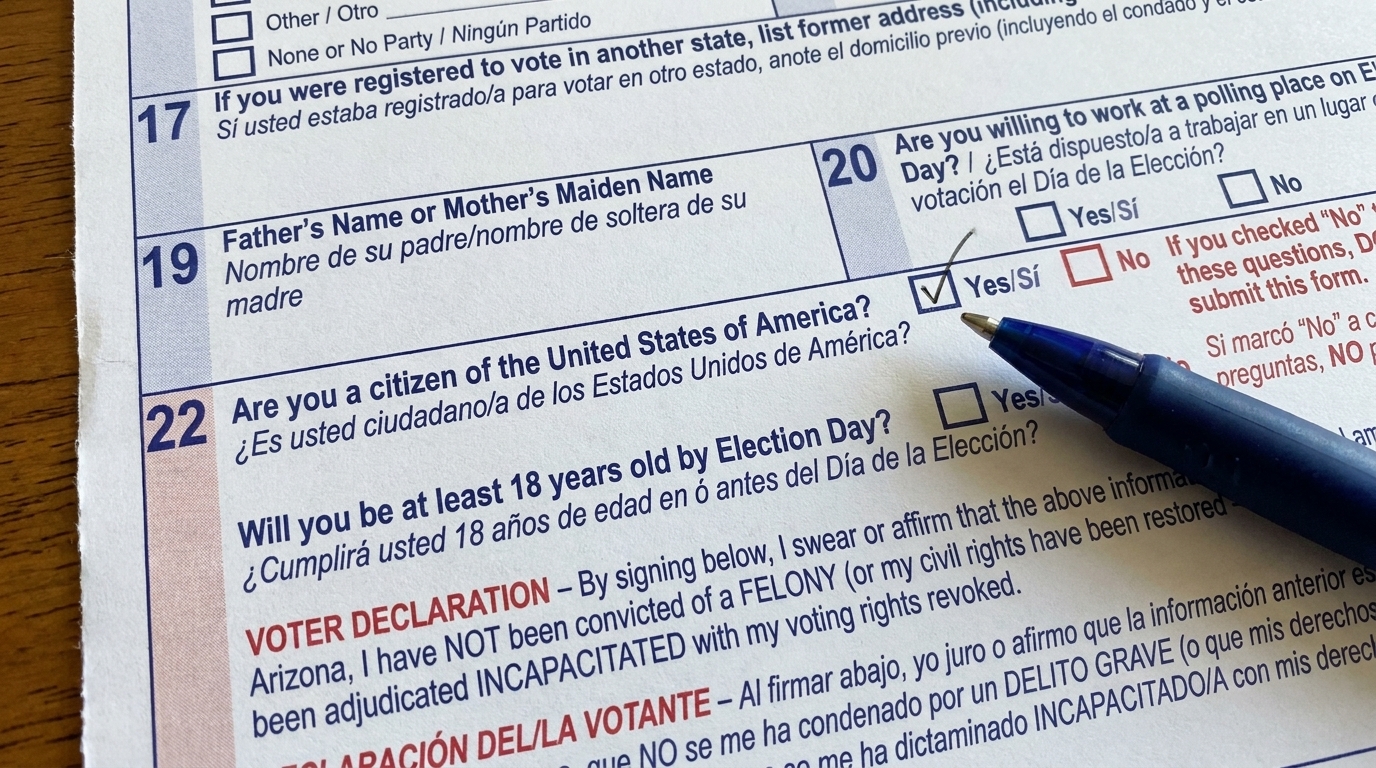
18 USC 1015(f) makes it an offense to knowingly make a false claim that a person is a citizen of the United States. The claim must be made in order to register to vote or to vote in any federal, state, or local election. The provision includes an initiative, recall, and referendum.
A common example is a voter registration form that asks whether the applicant is a citizen. Checking “yes” can become evidence if immigration records identify the applicant as a noncitizen. However, the form alone does not answer whether the person acted knowingly.
Section 1015 also covers other conduct:
- Subsection (a) applies when someone knowingly makes any false statement under oath in a matter relating to naturalization, citizenship, or the registry of aliens.
- Subsection (b) addresses a person who was naturalized or admitted as a citizen but denies that status to avoid a duty or liability required by law.
- Subsection (c) covers the use of a certificate of naturalization, certificate of citizenship, declaration of intention, or similar document known to be unlawfully obtained or procured through fraud.
- Subsection (d) concerns a false certificate or statement about an appearance, signature, oath or affirmation by a person with respect to an immigration or citizenship document.
- Subsection (e) addresses a false statement or claim of being a citizen or national of the United States to secure a federal or state benefit or service, or unlawful employment.
These are distinct offenses relating to citizenship and naturalization. A prosecutor must identify the subsection and prove its specific elements. The neutral Kolsrud Law Offices profile on FindLaw.com lists the firm’s federal criminal defense focus for readers reviewing counsel.
Congress added subsection (f) through the Illegal Immigration Reform and Immigrant Responsibility Act of 1996. In other words, that reform and immigrant responsibility act added 18 U.S.C. subsection (f) to address claims tied to voting. The wording and application of federal law remain subject to interpretation by the courts.
What Must the Government Prove Under 18 U.S.C. § 1015(f)?
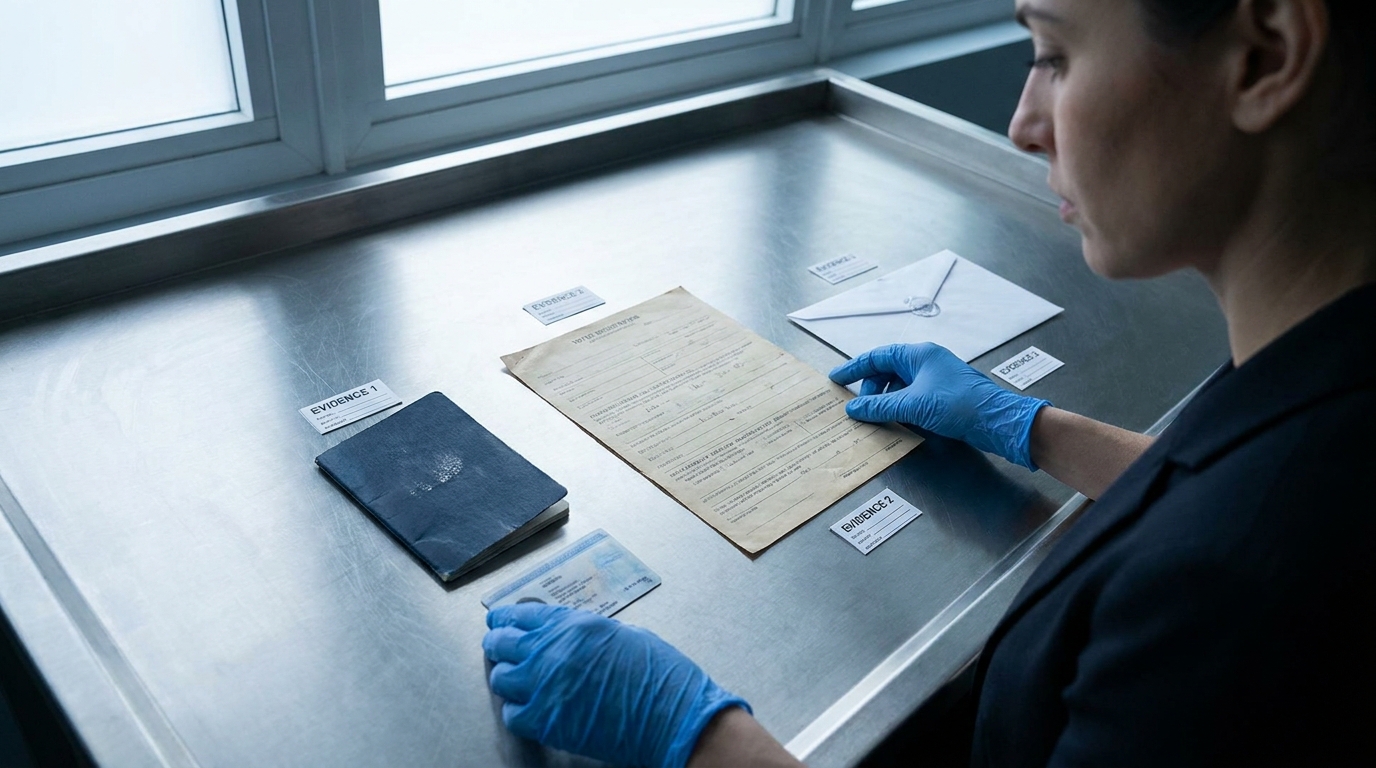
The government must prove that the defendant knowingly made a false citizenship statement or claim for voter registration or voting. The United States Department of Justice must prove each element beyond a reasonable doubt. Suspicion, negligence, or a poorly understood form does not replace proof of knowledge.
The core elements generally concern four questions:
- Did the defendant make a statement or claim?
- Did the statement claim United States citizenship?
- Was the claim false, and did the defendant know it was false?
- Was it made in order to register to vote or to vote in any federal, state, or local election?
The word knowingly focuses on the defendant’s state of mind. Prosecutors may use a signed statement under penalty of perjury, prior immigration applications, interview recordings, or repeated answers as circumstantial evidence. Circumstantial evidence asks the jury to infer a fact from surrounding conduct rather than direct testimony.
For example, suppose a motor vehicle office offers a combined license and voter form. A noncitizen signs the form after receiving unclear instructions from an employee. The defense would examine the form layout, language access, screen prompts, and whether the applicant reasonably understood the citizenship question.
The exact wording matters because subsection (f) targets citizenship, not every error on a registration application. A wrong address or misspelled name may violate another rule, but it does not by itself prove a violation of 18 U.S.C. § 1015(f). The prosecution still must connect the false claim to the order to register to vote or actual voting.
A federal criminal case can move from an agency referral to a grand jury investigation. After an indictment, the defendant attends an arraignment and receives discovery, which is the government’s evidence. Counsel may then file a motion to suppress unlawfully obtained evidence or another motion to narrow the charge before trial.
What Is the Penalty for a False Citizenship Claim?
A conviction under 18 USC 1015 can result in a fine, up to five years of imprisonment, or both. The laws state that a convicted person shall be fined under this title or imprisoned not more than five years. The actual sentence depends on the facts, criminal history, federal sentencing rules, and the judge’s findings.
The statutory maximum is not a prediction of the sentence in a particular case. In most cases, the court reviews the advisory federal Sentencing Guidelines, the nature of the conduct, and personal history. Probation may be considered in some cases, while other facts could increase potential custody exposure.
The consequences may reach beyond the courtroom. A charge or conviction could affect immigration applications, employment, professional licensing, and future dealings with government agencies. A naturalization applicant may also face questions about good moral character, false testimony, or voting conduct.
For example, a lawful permanent resident may be accused of checking a citizenship box before applying to naturalize. Even if the criminal case does not lead to incarceration, the same record could appear in an immigration review. That is why statements made during a criminal investigation may have consequences in a later petition.
Section 1015 is part of Chapter 69, titled “Nationality and Citizenship.” Other statutes in that chapter address fraud and misuse of visas, passports, and related documents. Federal white collar cases can involve similar document analysis, as explained in the firm’s article on federal credit card fraud under 18 U.S.C. § 1029.
Josh Kolsrud has received an AV Preeminent rating from Martindale Hubbell. That recognition supports the firm’s careful approach to cases where criminal liability and immigration risk overlap. It is important to assess both sets of consequences before making a plea or factual admission.
When to Speak With an Attorney
Contact Kolsrud Law Offfices as soon as possible if an election official, federal agent, or prosecutor asks about your citizenship or voter record. Important warning signs include:
- A request for an interview or written statement
- A subpoena for registration or immigration records
- Notice that your registration may be fraudulent
- Questions about a ballot cast while you were a noncitizen
- An immigration interview that raises past voting activity
How Does 18 USC 1015(f) Relate to Voter Registration Fraud?
Section 1015(f) targets a false citizenship claim, while other federal statutes can target fraudulent registration applications or unlawful voting. The government may investigate more than one code section when the same event includes several alleged acts. The charge selected depends on the evidence and the election involved.
52 U.S.C. § 20511(2)(A) makes it a federal felony to knowingly and willfully deprive or defraud residents of a fair election process. The cited provision covers the procurement or submission of voter registration applications known to be materially false, fictitious, or fraudulent under state law. It applies to an election involving a candidate for federal office.
By contrast, Section 1015(f) focuses on the defendant’s own false statement or claim of citizenship. It applies to registration or voting in a federal or state election and also a local election. A prosecution can concern an attempt to vote in a federal election, even when the ballot was not ultimately counted.
18 U.S.C. § 611 generally makes it unlawful for an alien to vote in certain elections involving federal candidates. It contains exceptions and should not be treated as identical to Section 1015(f). One law focuses on the act of voting, while the other focuses on a knowing false citizenship representation.
Another related law is 18 U.S.C. § 911, which prohibits falsely and willfully representing oneself to be a citizen of the United States. Section 911 does not require a voting purpose. Section 1015(f), however, requires the government to connect the claim to registration or voting.
| Federal Law | The Purpose | Important Distinction |
|---|---|---|
| 18 U.S.C. § 1015(f) | A knowing false citizenship claim for registration or voting | Requires a citizenship claim and a voting purpose |
| 52 U.S.C. § 20511(2)(A) | Materially fraudulent voter registration applications | Requires an election involving federal office |
| 18 U.S.C. § 611 | Voting by an alien in covered elections | Focuses on voting and contains statutory exceptions |
| 18 U.S.C. § 911 | A false and willful claim of citizenship | Does not require a registration or voting purpose |
Investigators may also explore criminal charges of conspiracy, identity fraud, or document offenses if multiple people allegedly worked together to submit votes. Similar charging overlap occurs in other federal matters, including public corruption and political crime investigations. Our defense strategy would identify which evidence supports each separate offense instead of treating every allegation as one broad fraud claim.
How Can you Defend Against Voter Fraud Charges?
Our defense strategy may challenge knowledge, falsity, purpose, identification, evidence collection, or the statute’s narrow exception. The right strategy depends on the form, the accused person’s immigration history, and what government agents can prove.
Common defense issues include:
- Lack of knowledge. The person misunderstood the form, language, or eligibility question.
- No false citizenship claim. The application may contain an error without stating that the applicant was a citizen.
- No voting purpose. The statement may have been made for a different reason unrelated to registration or voting.
- Unreliable attribution. Another person may have completed, changed, or submitted the form.
- Constitutional violations. Evidence may be challenged when investigators violated due process or search and seizure protections.
- Statutory exception. The specific family and residence requirements in subsection (f) may be satisfied.
What is the Subsection (f) Statutory Exception?
This exception can apply to a non-US citizen if each natural or adoptive citizen parent meets the statutory condition; the person permanently resided in the United States prior to age 16; and the person reasonably believed at the time that he or she was a citizen. The exception is applicable to an alien prosecuted under subsection (f) only when every listed requirement is met. A belief based solely on assumption is not enough if the family and residence conditions are absent.
In a major Supreme Court case, Maslenjak v. United States, 582 U.S. 335 (2017), the U.S. Supreme Court ruled that the government cannot revoke a person's U.S. citizenship for a false statement made during the naturalization process, unless that statement was materially used to play a role in the courts decision to grant citizenship.
Kolsrud Law Offices approaches these matters by testing the government’s evidence rather than assuming a form tells the whole story. We may collect birth records, a parent’s certificate of citizenship, a passport file, school records, and immigration documents. These materials may show why the person believed citizenship existed at the time of making the false statement. They may also establish whether the person was eligible for naturalization but had not yet completed what was required for naturalization.
Frequently Asked Questions About 18 USC 1015
These answers address common questions about false claims to citizenship, registration, and voting under current federal law as of 2026.
Is every incorrect citizenship box a federal crime?
No. Section 1015(f) requires a knowing false claim made for the purpose of registering or voting. A mistake, misunderstanding, language problem, or data entry error may undermine the required proof, depending on the evidence.
Does Section 1015(f) apply if the person registered but did not vote?
Yes. The statute covers a false citizenship claim made in order to register to vote, so an actual ballot is not required for that part of the offense. Whether the evidence proves a completed false claim depends on the form and submission process.
Does the law cover only federal elections?
No. Section 1015(f) covers a federal, state, or local election, including an initiative, recall, or referendum. Other statutes, such as 52 U.S.C. § 20511, require an election involving federal office.
Can a mistaken belief about citizenship be a defense?
Yes, a genuine mistaken belief may challenge the knowledge element. The evidence could include family statements, birth records, immigration documents, and what the person understood when completing the form.
What is the special exception for people with citizen parents?
The exception requires citizen natural or adoptive parents, permanent residence in the United States before age 16, and a reasonable belief of citizenship. All statutory conditions must be satisfied, and their application depends on documented family and residence facts.
Can a Section 1015 case affect naturalization?
Yes. Alleged false claims to citizenship or unlawful voting may affect a good moral character review and other immigration decisions. The effect varies by immigration status, conduct, date, and case outcome.
Are there other crimes I could be charged with?
Yes. The same investigation could potentially include Section 1015(f), election fraud, unlawful voting, conspiracy, or another document offense. Each count has separate elements that the prosecutor must prove.
Should I respond to federal agents to clear up a mistake?
Strongly recommended not to before understanding the risks and speaking with an attorney. A voluntary statement can be recorded, compared with other documents, and used in a federal criminal case. Our defense attorneys can communicate with agents and decide whether any response is advisable.
If You Are Facing Charges of 18 USC 1015, Call Us Immediately.
Kolsrud Law Offices can evaluate a false citizenship claim involving voter registration or voting and identify the evidence that matters. In a first conversation, the firm will review how the claim was made, your citizenship history, contact from investigators, and the immediate steps needed to protect your rights.
Josh Kolsrud has received the Arizona State Bar Presidential Award three times. Our attorneys draw on federal prosecutorial and defense experience to challenge unsupported allegations, address related immigration concerns, and fight for the best possible outcome allowed by the facts and law.
If you are under investigation or facing a violation of 18 U.S.C. § 1015(f), call (480) 999-9444 or fill out our contact page. We will help you understand the charge, make informed decisions about your defense strategy, and prepare for the next stage of the federal process.
Contact us today to schedule
A FREE CONSULTANT and learn more
about how we can help you.
An award-winning criminal defense attorney Since 2006
Why Choose Josh Kolsrud
With over 100 trials to his name, and years of experience as a state and federal prosecutor, Josh understands the law, the legal process, and your rights. Josh is also committed to representing every client with utmost integrity and dedication

Experience
Josh has prosecuted major crimes on the state and federal level, led a successful anti-human sex trafficking operation that saved lives, and argued before countless juries and justices for his clients

Expertise
Josh is an expert in both Arizona and federal criminal law, and is ready to put that expertise to work for you.

Dedication
As a prosecutor, Josh saw far too many defendants lose their livelihood due to poor representation. Josh will always give every client his complete attention and effort
Get a Free Initial Consultation:
Please complete our form below to get a free initial consultation
or call us at (480) 999-9444.