
Bribery Charges in Arizona: Public Corruption and Political Crimes
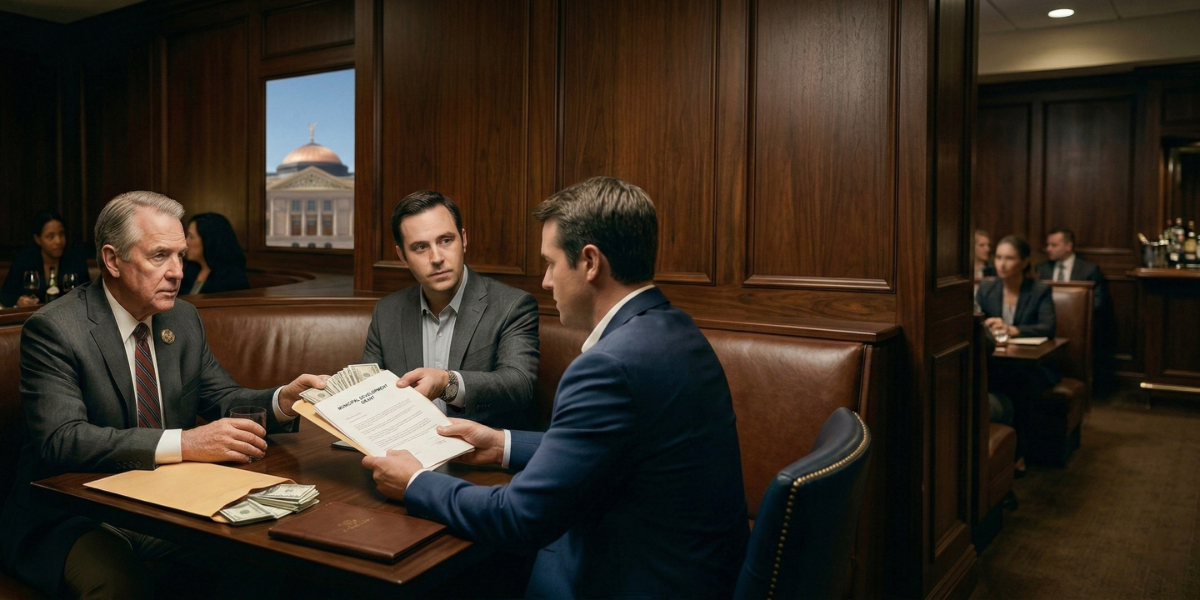
A bribery allegation can turn into a crisis fast. Even before formal filing, people can lose jobs, professional standing, and community trust. These are serious charges, and they often come with a public narrative that is hard to shake.
In many cases, the investigation starts quietly. A competitor complains about a contract award. A coworker reports “favoritism.” A recorded conversation is taken out of context. Then, suddenly, you are dealing with criminal charges in Arizona and you are being asked to “explain” texts, payments, or favors.
This article discusses the following:
- How Arizona Revised Statutes §13-2602 Defines Bribery and Public Corruption
- Bribery of a Public Servant or Party Officer Under 13-2602
- Who is a Public Servant and What “Official Acts” Really Mean
- Commercial Bribery in Arizona State and the Private-Sector Version of This Crime
- How a Prosecutor Builds a Bribery Case and What Evidence They Chase
- Penalty Exposure, Disqualification, and What “Years in Prison” Can Mean
- Defense Strategies a Criminal Defense Attorney Uses in Bribery Offenses Cases
- FAQs From a Bribery Attorney Perspective
- Important Things to Remember
- How Kolsrud Law Offices Can Help
This article explains how Arizona law treats bribery and related political crimes, especially under A.R.S. 13-2602. You’ll learn what prosecutors try to prove, what the penalty exposure can look like, and how the right criminal defense approach can protect you early.
How Arizona Revised Statutes §13-2602 Defines Bribery and Public Corruption
At its core, bribery involves offering something of value in exchange for influence over an official act. In Arizona, the main statute is A.R.S. 13-2602, titled bribery of a public servant or party officer. It covers the person offering the bribe and the government-side actor who accepts it or asks for it.
A “benefit” can be money, travel, event tickets, a job for a relative, a “consulting” fee, or anything else that has value. If the state argues the deal was designed to influence a vote, opinion, judgment, or discretion or other action, the allegation can be charged as bribery.
It also helps to say this clearly: bribery can occur even when someone thinks they are just “helping” or “showing appreciation.” The line is often drawn by intent and whether the benefit is tied to an official decision.
What Investigators Try to Prove in a Bribery Charge
| What they look for | Why it matters |
|---|---|
| A benefit changed hands or was promised | “Benefit” is central to the statute |
| A link to an official act | The case often turns on that connection |
| Communications (texts/emails) | A few lines can be framed as a “deal” |
| Timing | “Right before the vote” looks different than “months later” |
| Concealment | Hidden payments often draw extra scrutiny |

Bribery of a Public Servant or Party Officer Under 13-2602
Arizona’s main bribery statute is 13-2602. The law says a person commits bribery of a public servant or party officer if, with corrupt intent, they offer or promise a benefit to influence the decision-making of a public servant or party officer.
This is where the statutory language matters, because many investigations quote it word-for-word. The law addresses how a person can “confer any benefit” and how the government-side actor can “solicit” or accept it.
Key Statutory Verbs in A.R.S. 13-2602
Below are phrases you may see quoted in reports or charging documents, followed by what they typically mean in real life:
- Person commits bribery when the state claims there was corrupt intent.
- Confers or agrees to confer can include payments, gifts, or favors that are promised but not yet delivered.
- Agree to confer any benefit is often alleged when there was a plan, even if it was never completed.
- Confer any benefit upon can be anything of value, not just cash.
- Benefit upon a public servant can be framed as “anything of value provided to the government-side actor.”
- Benefit to a public servant is the same idea, and it is often proven through bank records and receipts.
- Public servant with the intent shows the focus is on motive and purpose.
- Party officer with the intent is how political party cases can be charged under the same statute.
- Influence the public servants is a common phrase in the state’s theory when they claim the “why” behind the benefit.
- Influence the public servant’s is often used the same way in reports and pleadings.
- Public servant’s or party officer’s is used because the statute covers both categories.
- Servant’s or party officer’s vote is often the center of the case when a jury is asked to decide intent.
- Action in his official capacity matters because the state focuses on decisions made through a government role.
- Official capacity as a public is sometimes how lawyers shorten the same concept in argument, meaning the person acted through public authority.
- Capacity as a public servant can include formal duties and discretionary calls made on the job.
Real-World Example
Imagine an Arizona state legislator is asked to vote on a piece of legislation that affects a major industry. A lobbyist offers a paid “consulting” contract to the legislator’s relative, with the understanding that his vote will be favorable. Prosecutors may claim this shows intent to influence the public and to influence a public decision through the legislator’s exercise of discretion.
Who is a Public Servant and What “Official Acts” Really Mean
Arizona defines public servant broadly. It includes any officer or employee of any branch of government, including law enforcement officers, and it can include a person participating as an advisor or consultant in performing a governmental function.
That means bribing a public official is not limited to elected officials. It can involve inspectors, procurement employees, police, agency supervisors, or others who make decisions that affect people’s lives and businesses.
Common “Public Servant” Roles That Show Up in Bribery Investigations
| Role | Why it becomes an issue |
|---|---|
| Procurement/contract staff | Contract awards can involve high-dollar incentives |
| Building/permit inspectors | Timing and approvals affect business profits |
| Police officers | Arrest decisions, evidence issues, and discretion |
| Regulators/licensing staff | Licenses can decide whether a business survives |
| Advisors/consultants to agencies | The definition can reach beyond payroll staff |
Under A.R.S. 13-2602, the government often argues the benefit was meant to influence the public servant or party officer’s decision-making, including their vote, judgment, or exercise of discretion.
“Not a Defense” Language People Miss in 13-2602
A.R.S. 13-2602 includes a section that trips people up. It says it is no defense to a prosecution under this section that a person sought to be influenced was not qualified to act in the desired way because such person had not yet assumed office, lacked jurisdiction, or for any other reason. You may see this summarized in filings using phrases like influenced was not qualified, person had not yet assumed, and yet assumed office.
That means a case can still be filed even if the state claims the target “couldn’t really deliver” the outcome—if the evidence suggests an agreement and corrupt intent.
Commercial Bribery in Arizona State and the Private-Sector Version of This Crime
Not every case involves the government. Arizona also criminalizes commercial bribery, which applies to private business settings. A.R.S. 13-2605 addresses situations where a person offers a benefit to influence an employee’s conduct without the employer’s consent, typically causing economic loss to the business.
Commercial bribery involves the idea of a kickback: a vendor pays an employee “under the table” so the vendor gets business, even if the company pays more or gets worse service. This is a different type of bribery than public corruption, but it is still treated seriously.
Under A.R.S. 13-2605, commercial bribery is classified by the amount involved, including class 5 felony exposure when the value is over $1,000.
Public Corruption Bribery vs Commercial Bribery
| Issue | Public-side case (A.R.S. 13-2602) | Private-side case (A.R.S. 13-2605) |
|---|---|---|
| Who is involved | public servant or party officer | Employee and vendor |
| What is being influenced | Vote, judgment, discretion | Purchasing or business decisions |
| Typical proof | Texts, meetings, favors, timing | Invoices, kickbacks, purchasing records |
| Common consequences | Disqualification from office | Restitution and employment fallout |
Contact us today to schedule a
FREE CONSULTATION and learn
how we can help you.
How a Prosecutor Builds a Bribery Case and What Evidence They Chase
A prosecutor rarely files these cases based on one fact. They build a story, and they use documents to support it. In state of Arizona investigations, the “paper trail” is often the real battleground: texts, emails, payment records, calendars, and witness interviews.
A common pattern is that the state argues bribery involves offering something of value “upon an agreement or understanding” that the public servant or party officer may act in the desired way because such person is being rewarded.
Evidence “Map” Used in Many Cases
- Communication evidence
Investigators look for phrases that imply a deal. They may claim bribery involves offering a benefit upon an agreement, even when the defense sees ordinary political or business talk. - Money and benefit evidence
They track how someone might accept any benefit upon a hidden understanding, such as disguised reimbursements or “consulting” invoices. - Witness evidence
Often, the state’s main witness is someone trying to reduce their own exposure. This can matter a lot when the witness is the person offering the bribe. - Official-action evidence
They look for a decision that can be framed as an action as a public servant, including discretion decisions like “move this permit faster” or “delay enforcement.”
Real-World Example
A business owner is waiting on an inspection. The state claims the owner agrees to accept any benefit from the inspector’s side later (such as “I’ll hire your cousin”), while the inspector accepts or agrees to accept something now. Prosecutors may argue the servant or party officer may be influenced to act in the desired way in exchange for the benefit.
Penalty Exposure, Disqualification, and What “Years in Prison” Can Mean
A.R.S. 13-2602 is classified as a class 4 felony. In many cases, that means real prison exposure, sometimes measured in years in prison, plus felony consequences that follow you long after the case ends.
On top of sentencing, Arizona has a separate statute on disqualification. If someone is convicted of bribery under 13-2602 (or certain related statutes), they can be disqualified from becoming a public servant and can lose their position in public office if they currently hold it.
This is also why bribery is considered a career-threatening allegation for public employees and public-facing professionals. Even allegations alone can affect licensing, elections, and employment.
Kolsrud Law Offices is a Phoenix-based law firm that handles high-stakes white collar and public corruption defense. Josh Kolsrud has spent many years working as a federal prosecutor, and that background matters when the government is using subpoenas, interviews, and financial records to build its case.
Penalties Section
| Charge | Statute | Classification | Notes |
| Bribery of a public servant (public servant or party officer) | A.R.S. § 13-2602 | considered a class 4 felony | Sentencing ranges depend on the circumstances and prior record; Arizona’s sentencing charts provide general reference points. |
| Commercial bribery (private-sector) | A.R.S. § 13-2605 | Classified by amount; includes class 5 felony exposure over $1,000 | Often tied to economic loss claims by the business. |
| Forfeiture and disqualification from office after conviction | A.R.S. § 13-2604 | Collateral consequence | Convicted defendants can be barred from becoming a public servant and can forfeit office. |
| Conflict of interest penalties (often charged alongside corruption cases) | A.R.S. §§ 38-503, 38-510 | Includes class 6 felony for intentional/knowing conduct | Conviction can require forfeiture of office or employment. |
Defense Strategies a Criminal Defense Attorney Uses in Bribery Offenses Cases
When you are facing bribery charges, the most important question is not “how does this look on the news?” It’s “what can the state prove beyond a reasonable doubt?” A defense attorney focuses on intent, context, and the absence of a real deal.
Kolsrud Law Offices is a law firm that takes on complex criminal law cases where the government relies on financial records and witness pressure. Josh Kolsrud’s background includes years on the government side, which helps him spot how a prosecutor frames intent and how to challenge it.
Here are defense tactics that often matter:
- No corrupt intent
The state must prove the benefit was tied to influencing an official action. If the defense can show legitimate reasons for payments, reimbursements, or support, it undercuts the “deal” narrative. - No proof of a deal
Prosecutors sometimes use vague texts to claim an agreement existed. The defense pushes for concrete proof, not assumptions, especially when the government relies on one witness. - Attack witness credibility
Many cases hinge on a cooperating witness. A criminal defense lawyer will expose motives, deals, and inconsistencies. - Challenge searches and data collection
Corruption cases often involve phone searches, email warrants, and business record seizures. If a search was unlawful or overbroad, key evidence can be suppressed. - Alternative explanation for “official action”
The defense may show the decision was routine, policy-based, or required by law, not influenced by any benefit. - Conspiracy overreach
Sometimes the state adds conspiracy when multiple people communicate. Arizona’s conspiracy statute requires an agreement plus an overt act, and those elements can be challenged.
This is also where “public servant” status can be contested. If the person was not acting within a governmental function as defined, the defense can force the state to prove coverage.
FAQs from a bribery attorney perspective
What is ARS 13-2602?
ARS 13-2602 is the Arizona bribery statute that covers bribery of a public servant or party officer. It includes offering a benefit to influence official action, and it also includes the public servant side of soliciting or accepting benefits tied to influence.
Do I have to pay anything to be charged?
Not always. The statute includes language about agree to accept any benefit and also about offers that are made but never completed.
What does “upon an agreement or understanding” mean?
It usually means the state claims there was a deal, stated or implied. The prosecution may point to timing, messages, or favors and argue there was a benefit upon an agreement to influence the public servant or party officer.
What if the official could not really do what I asked?
This comes up often. Under ARS 13-2602, the state may argue it does not matter if the influenced person was not qualified, if the influenced was not qualified, or if they lacked jurisdiction. The statute addresses those points directly in its “no defense” language.
Can this become a federal case?
Yes. Some investigations turn into federal bribery matters if federal agencies or federal funding are involved. A lawyer can assess whether a state case is likely to stay state-level or expand.
Does campaign activity change things?
It can. A political campaign, contributions to political causes, and political party involvement can be central facts in party-officer cases. The details matter because prosecutors may frame donations as a bribe if they claim there was an exchange for influence or appointment.
Why does early representation matter?
Early steps can shape the whole case. A criminal defense attorney can manage communications, respond to subpoenas, and prevent damaging “explanations” from being misunderstood. Kolsrud Law Offices offers a free consultation, and Josh Kolsrud’s experience includes having spent many years working as a federal prosecutor.
Important Things to Remember
How Kolsrud Law Offices Can Help
An award-winning criminal defense attorney Since 2006
Why Choose Josh Kolsrud
With over 100 trials to his name, and years of experience as a state and federal prosecutor, Josh understands the law, the legal process, and your rights. Josh is also committed to representing every client with utmost integrity and dedication

Experience
Josh has prosecuted major crimes on the state and federal level, led a successful anti-human sex trafficking operation that saved lives, and argued before countless juries and justices for his clients

Expertise
Josh is an expert in both Arizona and federal criminal law, and is ready to put that expertise to work for you.

Dedication
As a prosecutor, Josh saw far too many defendants lose their livelihood due to poor representation. Josh will always give every client his complete attention and effort
Get a Free Initial Consultation:
Complete our form below to get a free case review.
or call us at (480) 999-9444.