
Challenging Evidence of Federal Second-Degree Murder

A federal second degree murder charge places your freedom and future at risk. This article explains what prosecutors must prove, how defense counsel may challenge their evidence, and which defenses could apply. It also explains how federal murder differs from first-degree murder and manslaughter.
Josh Kolsrud is a former U.S. federal prosecutor who understands federal criminal cases from both sides of the courtroom. That background helps the firm assess how investigators build a case and where the government's proof may be weak. Every case is unique, so the right defense strategy depends on the facts and available evidence.
Kolsrud Law Offices takes a careful, client-focused approach to serious criminal defense. The firm works to explain each stage, protect your rights at every stage, and help you make informed decisions about your defense strategy. Early intervention may also reduce the risk of indictment or prevent avoidable statements and evidence problems.
Quick Answers
Federal second-degree murder is the unlawful killing of a human being with malice aforethought without the added features that make it first-degree murder. Malice aforethought is the intent to kill or another state of mind showing the blameworthiness required for murder. A defense may challenge federal jurisdiction, identity, intent, causation, forensic proof, witness accounts, or the legality of the investigation.
- The government must prove every element beyond a reasonable doubt.
- Federal jurisdiction requires a specific connection to federal law.
- Malice does not necessarily require advance planning.
- Suppression motions may keep unlawfully obtained evidence out of the case.
- A conviction may result in any term of years or life imprisonment.
This article discusses the following:
- What Is Federal Second-Degree Murder?
- How Can a Criminal Defense Lawyer Challenge the Evidence?
- What Second Degree Murder Defenses May Apply?
- How Does Murder Differ From Manslaughter and Felony Murder?
- What Are the Federal Penalties and Court Stages?
- Frequently Asked Questions About Federal Second-Degree Murder
- How Kolsrud Law Offices Can Help With Federal Second Degree Murder in the United States
In this article, we'll explain what federal law says about second-degree murder, what prosecutors must prove, and how defense attorneys can challenge evidence, witness testimony, and criminal intent. We'll also discuss potential defenses, including self-defense, lack of malice, and disputed federal jurisdiction, as well as the differences between murder and manslaughter, possible penalties, and how Kolsrud Law Offices can help protect your rights and build a strong defense.
What Is Federal Second-Degree Murder?
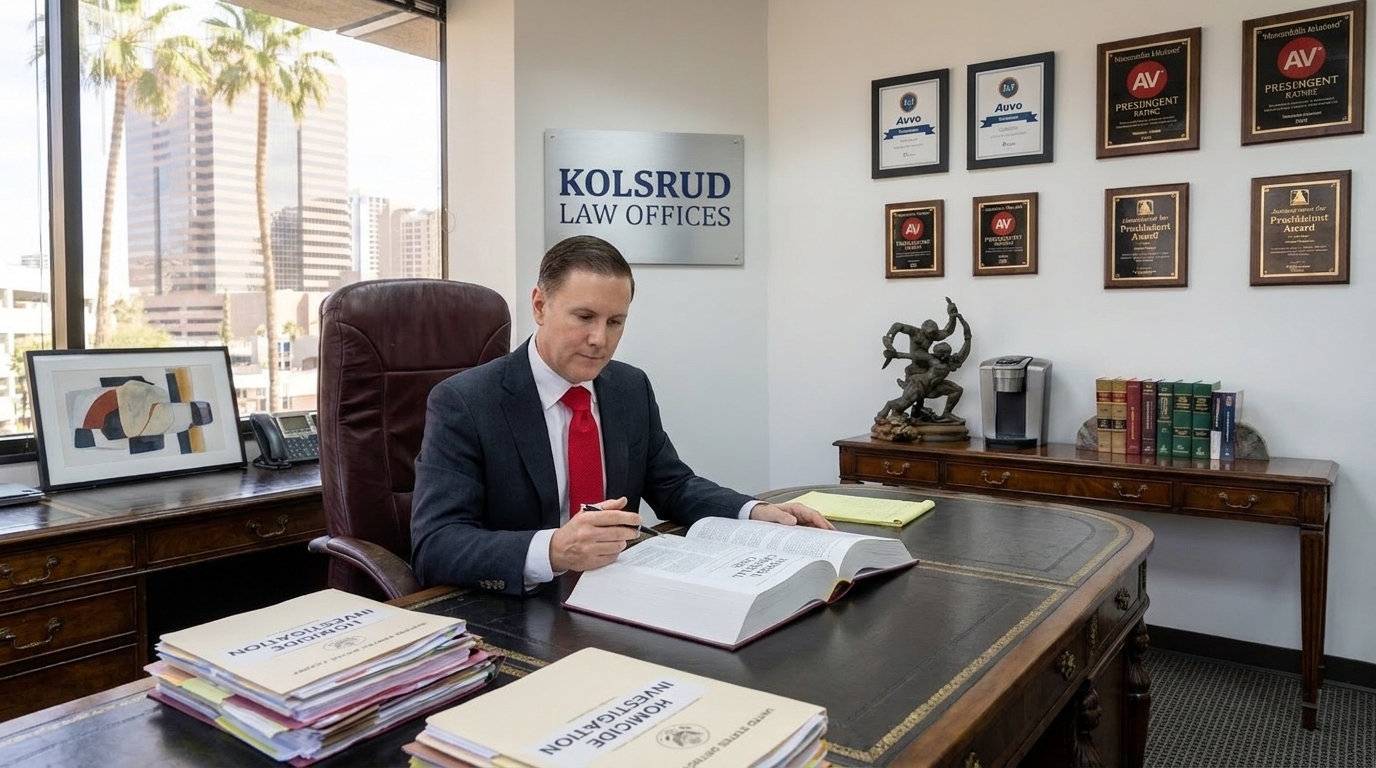
Federal second-degree murder is an unlawful killing committed with malice aforethought that does not qualify as first-degree murder. Under 18 U.S.C. § 1111, a federal statute, murder is the unlawful killing of a human being with malice aforethought.
The malice aforethought definition covers more than an express intent to kill. Depending on the circumstances, it may include conduct showing an extreme disregard for human life. In United States v. Fleming, 739 F.2d 945 (4th Cir. 1984), the court held that highly reckless conduct could support malice when it greatly departed from ordinary care.
First-degree murder generally includes a willful, deliberate, malicious, and premeditated killing. The federal statute also places certain killings committed during specified felony crimes in the first degree. Other murder under that code section is second-degree murder.
A federal charge also needs federal jurisdiction. Federal jurisdiction is the legal authority for a United States court to hear the case. 18 U.S.C. § 7 defines the special maritime and territorial jurisdiction of the United States. A killing on qualifying federal property is one possible jurisdictional basis.
For example, a death inside a federal facility presents a different jurisdiction question from a death at a private home. A child victim, assault allegation, or use of violence does not by itself establish federal jurisdiction. The prosecutor must identify a valid federal statute or jurisdictional connection.
State laws in California, Washington, and Minnesota may use different degree labels and definitions. Those state rules do not define a federal offense. Readers can find a focused overview of federal murder, homicide, and manslaughter charges on the firm's practice page.
Our attorneys understand that the line between federal and state authority can control an entire case. Josh Kolsrud's AV-Preeminent rating is reflected in the firm's Martindale.com profile.
How Can a Criminal Defense Lawyer Challenge the Evidence?
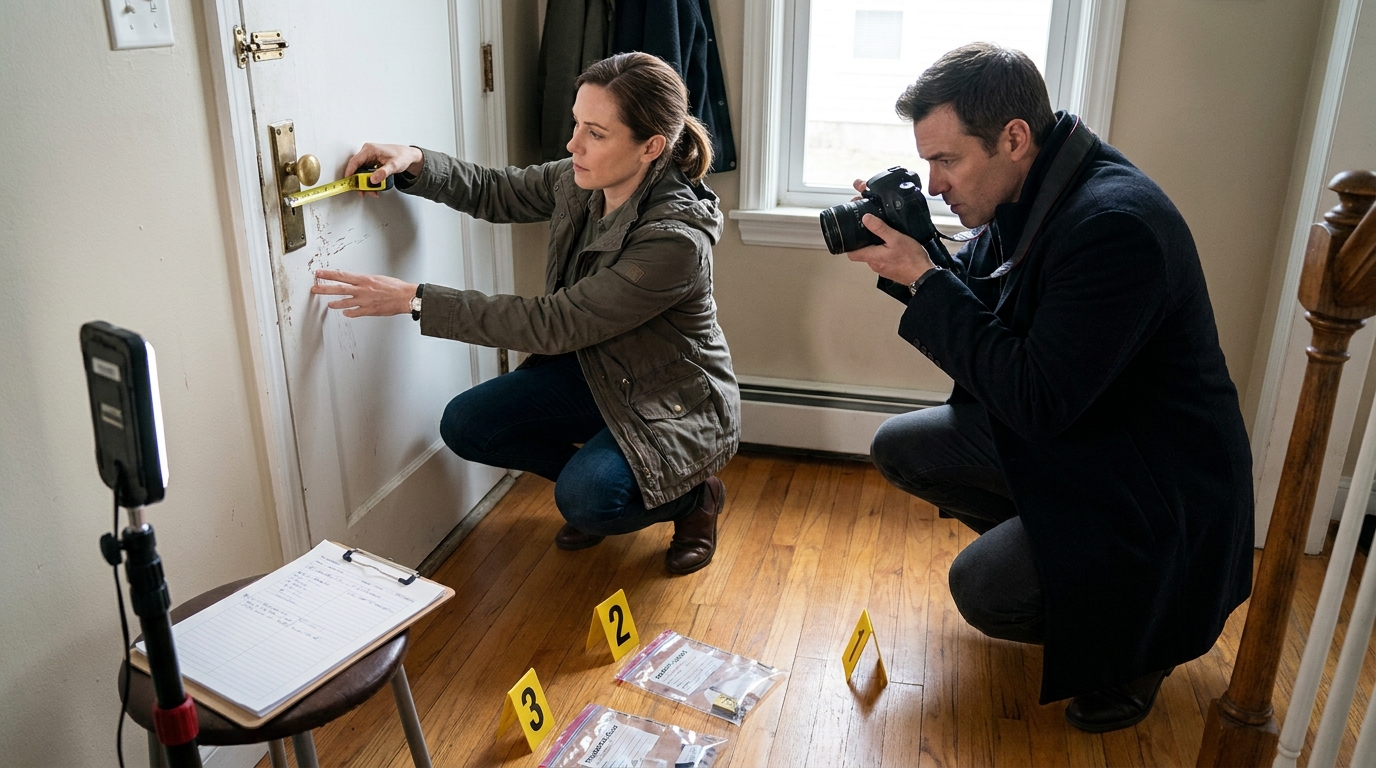
A criminal defense lawyer can challenge whether the evidence is reliable, admissible, and strong enough to prove each element. The review should test the government's theory rather than view each item in isolation.
Federal prosecutors may rely on forensic reports, phone records, location data, video, police interviews, witness accounts, or medical findings. Digital information requires special attention because extraction methods, timestamps, account access, and device ownership may be disputed. Similar authentication questions often appear in investigations involving federal mail and wire fraud evidence.
A defense attorney may examine:
- Whether the government can prove the defendant caused the victim's death.
- Whether a witness had poor visibility, bias, or changing memories.
- Whether forensic samples were collected, stored, and tested correctly.
- Whether messages show criminal intent or have an innocent context.
- Whether police followed constitutional limits during searches and questioning.
Consider a hypothetical case involving a phone found near the scene. A device may contain a threatening message, but that fact does not prove who wrote it, when it was sent, or whether it concerned the killing. Discovery is the exchange of case information. It may reveal login records or metadata that changes the meaning.
Financial records can also affect a claimed motive. The defense may use an expert to explain incomplete trading, banking, or business data. The same careful review of complex records is discussed in the firm's article about federal insider trading charges and defenses.
A motion to suppress asks the court to exclude evidence obtained in violation of constitutional rights. A separate motion may challenge an unreliable identification, involuntary statement, or unsupported expert opinion. Depositions are uncommon in federal criminal cases, so counsel must use discovery, hearings, subpoenas, and cross-examination effectively.
We have handled criminal matters where small details shaped the broader defense analysis. Josh Kolsrud has successfully handled more than 3,500 state and federal criminal cases, according to the firm biography. The firm's Birdeye profile provides a separate place to review client feedback and practice information.
What Second Degree Murder Defenses May Apply?
It depends on the facts: possible second degree murder defenses include lack of federal jurisdiction, mistaken identity, self-defense, lack of malice, and failure to prove causation. A defense may also seek to exclude unlawfully obtained evidence.
Self-defense may apply when a person reasonably used necessary force against an immediate threat, subject to the governing federal law and facts. Whether it applies is highly fact-sensitive. Video angles, injuries, witness location, prior statements, and the timing of each act may matter.
Lack of malice is another key issue. An accidental death caused by ordinary negligence does not automatically become murder. Even serious carelessness may support a different offense unless the government proves the mental state for second-degree murder.
A causation defense asks whether the accused person's conduct legally caused the death. Medical treatment, an independent act by another person, or uncertain pathology could affect that question. The issue is not merely whether something happened before the death, but whether it was a legally sufficient cause.
Federal jurisdiction itself can be contested. For example, the location may sit near federal land without being within federal jurisdiction. Records about ownership, agency control, and statutory status may become central evidence.
Our approach begins with listening to the client, preserving information, and testing the government's account. We understand that facing the full weight of the federal government can disrupt family life, employment, licensing, and a business. The defense should address those practical concerns while protecting due process, which is the right to fair legal procedures.
Josh Kolsrud has completed more than 100 jury trials. His recognition as one of The National Trial Lawyers Top 100 Criminal Defense supports the firm's focus on courtroom preparation.
Contact us today to schedule a
FREE CONSULTATION and learn
how we can help you.
How Does Murder Differ From Manslaughter and Felony Murder?
The main difference is the required mental state and, for felony murder, the relationship between a death and that felony. Felony murder treats a killing as murder because it occurred during a specified felony. Labels alone do not decide the offense because the facts and federal code control.
| Federal offense | Core distinction | Evidence often disputed |
|---|---|---|
| First-degree murder | Premeditated killing or another form listed in the federal statute | Planning, intent to kill, and connection to an enumerated felony |
| Second-degree murder | Malice aforethought without facts placing the killing in the first degree | Malice, identity, causation, and federal jurisdiction |
| Voluntary manslaughter | An unlawful killing without malice after adequate provocation or in the heat of passion | Provocation, timing, emotional state, and use of force |
| Involuntary manslaughter | An unlawful killing without malice during certain unlawful conduct or grossly negligent lawful conduct | Negligence, foreseeability, and cause of death |
18 U.S.C. § 1112 defines voluntary manslaughter and involuntary manslaughter under federal law. Voluntary manslaughter may involve a heat of passion response to adequate provocation. Involuntary manslaughter may involve gross negligence but not malice.
Felony murder is a form of first-degree murder under § 1111 when a killing is committed during specified crimes. The statute names offenses such as robbery and certain forms of burglary, kidnapping, aggravated sexual abuse, and child abuse. The exact statutory list and the link between the felony and death must be reviewed carefully.
A common mistake is treating any death during any felony as federal felony murder. That assumption is too broad. The charged felony, timing, causation, and jurisdiction all require legal analysis.
Unlike a homicide prosecution, federal embezzlement and bribery charges focus on financial or official misconduct. Still, records from a separate financial investigation could become alleged motive evidence in a murder case. Counsel should test whether that evidence is relevant or unfairly prejudicial.
What Are the Federal Penalties and Court Stages?

A federal second-degree murder conviction can result in imprisonment for any term of years or for life. Section 1111 states that first-degree murder and second-degree murder carry different statutory punishment provisions.
As of 2026, § 1111 authorizes any term of years or life imprisonment for second-degree murder. The eventual sentence depends on the statute, federal sentencing law, findings made in the case, and the defendant's circumstances. Parole generally should not be assumed in a federal sentence.
The process may begin before an arrest when federal law enforcement agents seek interviews, records, location data, or search warrants. An officer may describe the person as a witness even when investigators are testing a theory of criminal liability. Speaking without counsel could create statements that prosecutors later use out of context.
After an arrest, an arraignment is the hearing where the defendant hears the charges and enters a plea. The case then typically moves through discovery, motion practice, hearings, plea discussions, and possibly trial. Sentencing occurs after a conviction or guilty plea.
Under current federal law, the prosecution must prove guilt beyond a reasonable doubt. The defendant does not carry the burden of proving innocence. A pro se defense means proceeding without a lawyer and may create serious risks involving deadlines, waived objections, expert evidence, and federal procedure.
From our experience, early work should preserve video, electronic records, medical evidence, and witness information before it disappears. Josh Kolsrud has been featured more than 400 times on news programs and podcasts discussing legal issues, according to the firm biography.
When to Speak With an Attorney
Contacting a federal criminal defense attorney is advisable as soon as you learn about an investigation. Counsel may intervene before an interview, indictment, or evidence loss, although the available options depend on the stage and facts.
- Agents have requested an interview or device access.
- A search warrant or subpoena has been served.
- Another person is blaming you for the death.
- Investigators are asking about motive, weapons, or location data.
- You have been charged or ordered to appear in federal court.
FAQs About Federal Second-Degree Murder
What must prosecutors prove for federal second-degree murder?
Prosecutors must prove an unlawful killing within federal authority, malice aforethought, causation, and the defendant's identity beyond a reasonable doubt. They must also show that the murder does not require treatment as first-degree murder under the charged theory.
Can second-degree murder result in life in prison?
Yes, life in prison is a possible penalty under § 1111. Life imprisonment is not the only authorized sentence, because the code also permits a term of years.
What is the main difference between first-degree and second-degree murder?
The main difference is that first-degree murder usually requires premeditation or another circumstance listed in the federal statute. Second-degree murder requires malice but lacks the feature that places the killing in the first degree.
Can federal murder charges be reduced to manslaughter?
It depends on the evidence, negotiations, and governing law — a different or reduced charge may be possible when the evidence does not support malice or another required element. Whether voluntary manslaughter or involuntary manslaughter fits also depends on those factors.
What is the federal felony murder rule?
The federal felony murder rule treats certain killings committed during specified felony offenses as first-degree murder. The government must connect the death to a felony listed in the statute, rather than relying on any unrelated crime.
Can forensic evidence defeat a murder charge?
Yes, forensic evidence can weaken a murder charge when reliable findings conflict with the government's theory, but its effect depends on reliability and context. A criminal defense attorney may examine testing methods, contamination, chain of custody, expert assumptions, and conflicting medical findings.
How a Criminal Defense Attorney from Kolsrud Law Offices Can Help
An award-winning criminal defense attorney Since 2006
Why Choose Josh Kolsrud
With over 100 trials to his name, and years of experience as a state and federal prosecutor, Josh understands the law, the legal process, and your rights. Josh is also committed to representing every client with utmost integrity and dedication

Experience
Josh has prosecuted major crimes on the state and federal level, led a successful anti-human sex trafficking operation that saved lives, and argued before countless juries and justices for his clients

Expertise
Josh is an expert in both Arizona and federal criminal law, and is ready to put that expertise to work for you.

Dedication
As a prosecutor, Josh saw far too many defendants lose their livelihood due to poor representation. Josh will always give every client his complete attention and effort
Get a Free Initial Consultation:
Complete our form below to get a free case review.
or call us at (480) 999-9444.