
Federal Firearm Charges for Suppressors and Machine Guns
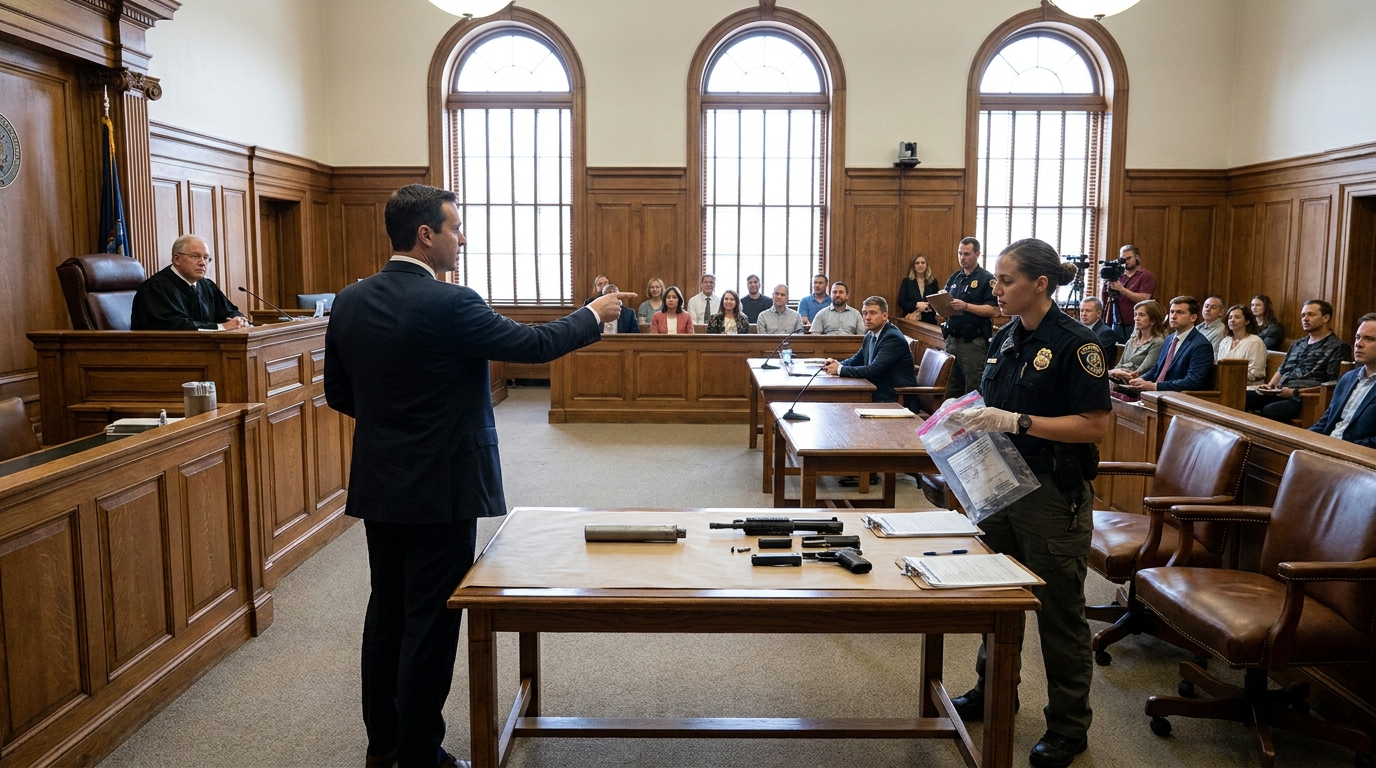
Federal firearm charges involving suppressors or machine guns require immediate attention. This article explains the governing federal laws, potential penalties, common evidence, and possible defenses. Josh Kolsrud is a former United States federal prosecutor who has handled more than 3,500 state and federal criminal cases. That experience provides insight from both sides of the courtroom.
Kolsrud Law Offices focuses on clear guidance and careful preparation. The firm helps clients understand the accusations, protect their rights at every stage, and make informed decisions about their defense strategy. Every case is unique, so the right response depends on the weapon, registration records, alleged conduct, and how investigators obtained evidence.
Quick Answers
Federal law closely regulates suppressors and machine guns. Possession may lead to federal criminal charges when a device is unregistered, illegally transferred, newly manufactured for civilian use, or connected to another federal crime.
- A suppressor can qualify as a firearm under federal law, even when it is not attached to a gun.
- Federal machine gun restrictions may apply to the weapon, a conversion device, or certain combinations of parts.
- Registration, knowledge, possession, and search issues often shape the defense.
- A machine gun or silencer connected to drug trafficking or a violent offense may create additional sentencing exposure.
This article discusses the following:
- What Are Federal Firearm Charges Involving These Devices?
- How Does Federal Law Distinguish Suppressors and Machine Guns?
- What Must the Government Prove in a Federal Firearms Case?
- What Penalties Can Follow Federal Gun Charges?
- Which Defenses May Apply to Suppressor or Machine Gun Charges?
- Frequently Asked Questions About Federal Firearm Charges
- How Kolsrud Law Offices Can Help
What Are Federal Firearm Charges Involving These Devices?
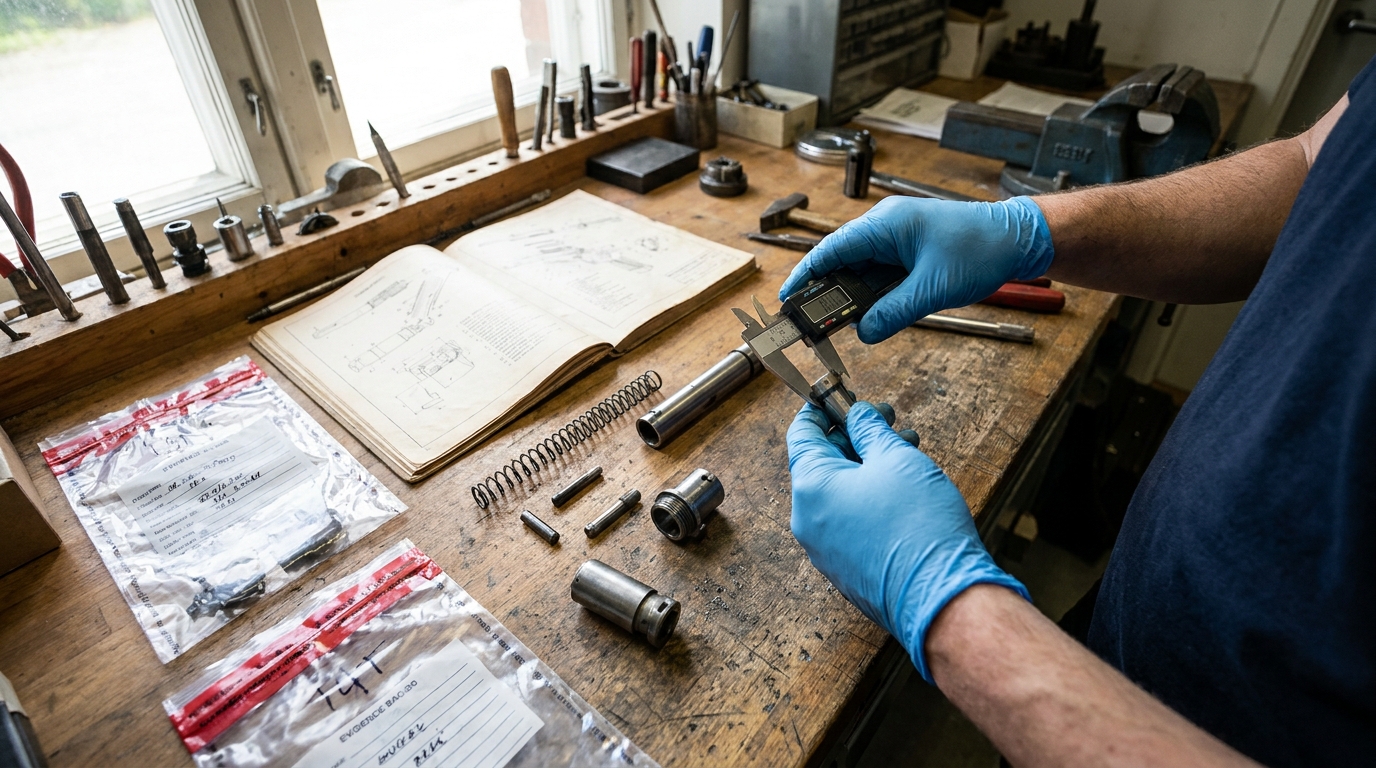
They are criminal accusations based on conduct prohibited by the United States Code. For suppressors and machine guns, the allegations often concern possession, registration, transfer, manufacturing, or use during another crime. These federal crimes are separate from any state firearm laws that might also apply.
The National Firearms Act, or NFA, controls certain firearms through registration and transfer requirements. Under 26 U.S.C. § 5845, the NFA definition of a firearm includes silencers and machine guns. Federal agents and prosecutors commonly use the term “suppressor,” while the United States Code uses “firearm silencer” and “firearm muffler.”
A typical unregistered suppressor charge may be brought under 26 U.S.C. § 5861(d). That code section makes it unlawful to receive or possess an NFA firearm that is not registered to the person in the National Firearms Registration and Transfer Record. A common mistake is assuming that an unfinished, detached, or homemade device falls outside federal law.
Machine gun possession charges may involve a complete weapon or a small conversion device. Investigators may claim that a device allows a gun to fire more than one shot through a single trigger function. A person researching related restrictions can also review the firm’s discussion of illegal firearm possession and prohibited weapons.
Our attorneys examine what the device does, where it was found, who controlled the property, and whether it was registered. The firm’s State Bar Directory profile confirms Josh Kolsrud’s professional listing. His background includes more than five years handling felony cases at the Maricopa County Attorney’s Office.
How Does Federal Law Distinguish Suppressors and Machine Guns?
It distinguishes suppressors and machine guns by their design, function, and component parts. A device does not need a particular label or retail form to meet a federal definition.
18 U.S.C. § 921(a)(25) defines a firearm silencer or muffler. The definition covers a device for silencing, muffling, or reducing the report of a portable firearm. It may also cover combinations of parts intended for assembly and certain parts used in fabrication.
For machine guns, 26 U.S.C. § 5845(b) covers weapons that shoot automatically more than one shot through a single trigger function. The definition also reaches a frame, receiver, conversion part, and certain combinations of parts. This means possessing a small conversion device could trigger a federal investigation even when the attached gun began as a semiautomatic firearm.
18 U.S.C. § 922(o) generally prohibits transferring or possessing a machine gun. Limited exceptions include lawful government possession and certain machine guns lawfully possessed before the federal cutoff established by Congress. Whether an exception applies depends on the weapon’s history and reliable records.
The ATF firearms identification guidance explains technical categories used during federal examinations. ATF means the Bureau of Alcohol, Tobacco, Firearms and Explosives, the federal agency that commonly investigates firearms offenses. In a disputed case, counsel may compare the government’s laboratory conclusions with the actual design and operation of the item. Photographs alone may not answer every technical question.
The difference can be illustrated by three items found during one search: a threaded metal tube, internal baffles, and a conversion switch. Investigators may treat the first two items together as suppressor parts and classify the switch separately as a machine gun. The facts, intended use, and expert testing could determine whether either theory is supported.
Kolsrud Law Offices brings substantial trial experience to these technical disputes. Josh Kolsrud has completed more than 100 jury trials, and the firm’s Lawyers.com profile provides additional information about its criminal defense practice.
What Must the Government Prove in a Federal Firearms Case?
The government must prove every required element of the charged federal offense beyond a reasonable doubt. The exact elements depend on the statute, the device, and the prosecution’s theory.
Possession is often a key dispute, including whether the device was physically on the defendant. Constructive possession means the defendant allegedly had both the power and intent to control it, even if it was found elsewhere.
Consider a suppressor found in a locked garage shared by three adults. Ownership of the property alone may not establish who knew about the device or controlled it. Agents could look for keys, fingerprints, messages, purchase records, video, statements, or tools used to make the item.
Knowledge also matters. In Staples v. United States, 511 U.S. 600 (1994), the Supreme Court held that the government had to prove the defendant knew the features that made his rifle a machine gun under the NFA. That precedent does not mean ignorance of the law is a defense. It addresses knowledge of the weapon’s physical characteristics.
Federal agents may use search warrants, controlled purchases, shipping information, online messages, device records, and interviews. The ATF commonly leads firearms investigations, sometimes with the FBI or other agencies. A court-authorized warrant must still comply with the Fourth Amendment and governing federal rules.
Federal crimes may also be alleged when guns or restricted devices move through interstate commerce. Other cases involve a federal firearms licensee, or FFL, or an accusation of selling without the required license. The firm’s article about criminal charges connected to selling a firearm discusses related risks, although a federal investigation requires a separate analysis.
Our team reviews the investigation rather than accepting an agent’s label at face value. That includes tracing custody of the evidence, inspecting laboratory reports, and identifying statements taken before counsel became involved. The firm has received the AV Preeminent rating from Martindale Hubbell, and its Thumbtack profile describes its criminal defense services.
Contact us today to schedule a
FREE CONSULTATION and learn
how we can help you.
What Penalties Can Follow Federal Gun Charges?
They depend on the code section, criminal history, device, related conduct, and federal sentencing rules. A conviction may result in prison, fines, forfeiture, supervised release, and loss of firearm rights.
Under 26 U.S.C. § 5871, a violation of the NFA may carry up to 10 years in prison. Federal fine provisions may also apply. The sentence is not automatic, because the court must consider the conviction, advisory guidelines, statutory factors, and individual facts. Advisory guidelines recommend sentencing ranges but do not bind the judge.
A separate and especially serious issue occurs under 18 U.S.C. § 924(c). This law covers using, carrying, or possessing a firearm in furtherance of a drug trafficking crime or crime of violence. If the firearm is a machine gun or is equipped with a silencer, the statute provides a 30-year mandatory minimum for that § 924(c) count, subject to the precise charge and proof. The mandatory minimum is the shortest prison term the law generally permits.
A mandatory minimum limits the sentencing judge’s discretion. Section 924(c) also generally requires its prison term to run after the sentence for the related federal crime. Drug crimes, assault, robbery, theft, or other conduct do not automatically support this charge. Prosecutors must prove the required connection between the firearm and the qualifying offense.
Separate prohibited-person charges may be brought under 18 U.S.C. § 922(g). This provision can apply to a felon and certain other prohibited individuals, including some people with qualifying domestic violence convictions. The firm provides more background on firearm possession by a prohibited possessor.
The Armed Career Criminal Act, or ACCA, appears in 18 U.S.C. § 924(e). It can impose a 15-year minimum in a qualifying 922(g) case involving three prior convictions for a violent felony or serious drug offense committed on different occasions. ACCA analysis is technical and often depends on court precedent about the prior offenses.
The United States Sentencing Commission publishes the federal sentencing guidelines used to calculate an advisory range. An advisory range is a recommended span of imprisonment based on the offense and criminal history. The table below shows facts counsel commonly reviews before that calculation. It does not predict a particular sentence.
| Issue | Why It Matters | Records to Review |
|---|---|---|
| Device classification | Classification affects the offense and potential penalties. | Lab reports, photographs, testing video |
| Registration history | Records may support or challenge an NFA allegation. | Forms, transfer records, serial information |
| Alleged connection to another crime | A claimed link may increase prison exposure. | Messages, video, witness accounts |
| Prior convictions | Certain records may affect eligibility and sentencing. | Judgments, plea records, charging papers |
As of 2026, federal sentencing remains highly dependent on the specific counts and proven facts. Laws vary by state, but this article addresses only federal crimes. Under current federal law, collateral effects may include forfeiture of firearms, loss of an FFL, damaged employment prospects, and business disruption.
Which Defenses May Apply to Suppressor or Machine Gun Charges?

Defenses can challenge possession, knowledge, classification, registration evidence, or the legality of the investigation. The strongest approach depends on the evidence exchanged during a federal criminal case, known as discovery.
A motion to suppress is a formal request that the court exclude unlawfully obtained evidence. A criminal defense lawyer may file this motion and may also challenge false or incomplete statements used to secure a warrant. If the court excludes critical evidence, the prosecution might reduce or dismiss charges, but the outcome depends on the specific facts.
Other defenses can focus on whether the item legally qualifies as a suppressor or machine gun. Independent examination may reveal that a device cannot function as alleged or lacks required characteristics. In some cases, the prosecution may rely on possession of parts and an alleged intent to assemble them rather than a working firearm.
The defense should also test chain of custody. This record shows who collected, stored, tested, and transferred evidence. A missing entry does not automatically end a case, but it may support cross-examination or a motion concerning reliability.
From our experience, early review can prevent avoidable statements and preserve technical evidence. Kolsrud Law Offices approaches these cases by identifying the government’s theory, reviewing each element, and preparing for negotiation, motion practice, or trial. Josh Kolsrud’s recognition as one of The National Trial Lawyers Top 100 Criminal Defense attorneys reflects the courtroom focus he brings to serious criminal charges.
When to Speak With an Attorney
Speak with an attorney promptly after federal agents make contact, conduct a search, detain a package, issue a subpoena, or schedule a court proceeding. Early intervention can reduce the risk of indictment or additional charges in some cases.
- ATF or FBI agents request an interview.
- Agents execute a search warrant at a home or business.
- A package containing firearm parts is detained.
- A grand jury subpoena requests records or testimony.
- A complaint, indictment, or arraignment has been scheduled.
A federal criminal case typically moves through investigation, charging, arraignment, discovery, motions, plea discussions, and possibly trial. A defendant who proceeds pro se does so without a lawyer and risks missed deadlines, waived defenses, and procedural errors. It is advisable to have federal criminal defense counsel evaluate the case before giving information to investigators.
Frequently Asked Questions About Federal Firearm Charges
Is a suppressor itself considered a firearm?
Yes, federal law generally treats a firearm silencer or muffler as a firearm. The definition can include a complete device, a combination of parts, or certain components intended only for assembly or fabrication.
Can someone face charges for an unregistered homemade suppressor?
Yes, possessing a homemade device that meets the federal definition may support unregistered suppressor charges. The government must still prove the required elements, including possession and any applicable knowledge requirement.
Is a machine gun conversion device treated as a machine gun?
Yes, if it meets the federal definition. That definition may cover a part designed and intended solely and exclusively, or a combination of parts designed and intended, to convert a weapon into a machine gun.
What is the sentence for a first federal gun charge?
It depends on the offense, device, related conduct, criminal history, statutory limits, and federal guidelines. There is no single sentence for a first-time federal charge. Some charges carry a mandatory minimum, while others do not.
Can federal firearm charges be dropped?
Yes, federal charges can be dismissed or reduced when evidence is insufficient, unlawfully obtained, or inconsistent with the charged offense. Whether that happens depends on prosecutorial decisions, court rulings, the facts, and the procedural posture. Procedural posture means the stage and status of the case.
Do Second Amendment decisions prevent these prosecutions?
No, not automatically. The Second Amendment does not by itself prevent these prosecutions. Second Amendment case law continues to develop, and constitutional arguments depend on how courts interpret the specific restriction, the person’s status, historical precedent, and the type of weapon involved.
How Kolsrud Law Offices Can Help with Federal Firearm Charges in the United States
An award-winning criminal defense attorney Since 2006
Why Choose Josh Kolsrud
With over 100 trials to his name, and years of experience as a state and federal prosecutor, Josh understands the law, the legal process, and your rights. Josh is also committed to representing every client with utmost integrity and dedication

Experience
Josh has prosecuted major crimes on the state and federal level, led a successful anti-human sex trafficking operation that saved lives, and argued before countless juries and justices for his clients

Expertise
Josh is an expert in both Arizona and federal criminal law, and is ready to put that expertise to work for you.

Dedication
As a prosecutor, Josh saw far too many defendants lose their livelihood due to poor representation. Josh will always give every client his complete attention and effort
Get a Free Initial Consultation:
Complete our form below to get a free case review.
or call us at (480) 999-9444.