
Marriage Fraud Investigation: Evidence and Federal Penalties

A marriage fraud investigation can threaten immigration status and expose both spouses to federal criminal charges. This article explains what can start an investigation, how USCIS evaluates a relationship, and which penalties could follow. Understanding the process helps you make informed decisions about your defense strategy.
Josh Kolsrud is a former U.S. federal prosecutor who has handled matters from both sides of the courtroom. According to the firm biography, he has handled more than 3,500 state and federal criminal cases. Kolsrud Law Offices focuses on clear guidance, careful preparation, and protecting client rights at every stage.
Marriage fraud cases often involve both immigration and criminal law. A poor response to one agency may affect a separate proceeding. Every case is unique, so the facts, records, statements, and stage of the investigation matter.
Quick Answers
It depends on the couple's intent: a federal marriage fraud investigation examines whether they married in good faith or entered a sham marriage to secure immigration benefits. USCIS may review records, compare interview answers, inspect prior applications, and refer suspected criminal conduct to federal investigators.
- The key issue is the parties' intent when they married.
- Inconsistent interviews can matter, but one difference does not prove fraud.
- Financial, residential, family, and communication records may become evidence.
- A finding may affect a visa, green card, citizenship application, or removal case.
- Federal charges can carry prison, fine, and immigration consequences.
This article discusses the following:
- What Is Immigration Marriage Fraud?
- How Does USCIS Investigate Marriage Fraud?
- What Evidence May Prove or Dispute a Fraud Allegation?
- What Are the Federal Marriage Fraud Penalties?
- What Should You Do During an Investigation?
- Frequently Asked Questions About Marriage Fraud Investigations
- How Kolsrud Law Offices Can Help with a Marriage Fraud Investigation in the United States
What Is Immigration Marriage Fraud?

It depends on the couple's intent: immigration marriage fraud means entering a marriage to evade federal immigration rules rather than to build a genuine marital life. The central question is intent at the time of the marriage. A later divorce, separation, or unusual living arrangement does not by itself establish a fraudulent scheme.
Under current federal law, 8 U.S.C. § 1325(c) addresses a person who knowingly enters a marriage to evade immigration law. The statute focuses on knowledge and purpose. It does not treat every failed marriage or family dispute as a federal crime.
A sham marriage may involve a U.S. citizen, a lawful permanent resident, or a foreign national seeking a visa or green card. Some schemes include money, staged photographs, false addresses, or coached answers. Others involve real couples whose incomplete records or personal circumstances lead to suspicion.
The Supreme Court addressed marriages created to evade immigration requirements in Lutwak v. United States, 344 U.S. 604 (1953). The Court held that evidence concerning the true purpose and conduct of the parties could support conspiracy convictions. That precedent does not mean every unconventional relationship is unlawful.
For example, consider a couple who married in Arizona but temporarily live apart because one spouse works in another state. Separate homes may prompt questions, yet work records, travel receipts, messages, and shared family plans could explain the arrangement. Federal investigators should evaluate the whole relationship, not one fact in isolation.
Josh Kolsrud has conducted more than 100 jury trials, according to the firm biography. He was also awarded The National Trial Lawyers Top 100 Criminal Defense recognition, reflected in his The National Trial Lawyers profile. That courtroom background is relevant when an immigration inquiry may trigger a federal investigation.
How Does USCIS Investigate Marriage Fraud?
It depends on the case: USCIS investigates marriage fraud by checking applications, records, interview answers, and information from other government agencies. The review may remain administrative or expand into a criminal investigation involving DHS, ICE, HSI, the FBI, or the Department of Justice.
United States Citizenship and Immigration Services, commonly called USCIS, reviews family based petitions and immigration benefits. Its official USCIS Policy Manual explains that officers evaluate whether a marriage was entered in good faith. Officers may compare the Form I-130 (the petition used to ask the government to recognize a qualifying family relationship), visa applications, prior statements, and later requests for citizenship.
Common investigative steps include:
- Checking addresses, travel history, tax information, and public records.
- Comparing separate or joint interviews for meaningful inconsistencies.
- Reviewing financial accounts, leases, insurance, photographs, and messages.
- Checking whether either person has sponsored multiple foreign nationals.
- Examining tips, a former spouse's report, or information received during a divorce.
- Referring suspected criminal conduct to federal enforcement agencies.
A step people often get wrong is trying to make every interview answer sound identical. Natural differences can occur because spouses remember dates and routine events differently. Scripted answers may create added concern, especially if both people repeat the same unusual wording.
USCIS may issue a notice seeking more information or state an intent to deny a petition. In some cases, agency officers conduct additional interviews. A person should not guess, change records, destroy messages, or ask another person to provide false information.
The firm's Experience.com profile provides background and client review information for people evaluating counsel. This can be useful when an administrative review could develop into a federal criminal case.
What Evidence May Prove or Dispute a Fraud Allegation?
It depends on context: evidence in a marriage fraud case usually tests whether the couple intended to share a life when they married. No single document necessarily decides the case, and the value of each item depends on how it fits with the other facts.
USCIS and prosecutors may review several evidence groups:
| Evidence category | What investigators may check | Context that may matter |
|---|---|---|
| Shared residence | Leases, mail, utilities, and identification | Work, military service, caregiving, or school may explain time apart |
| Financial life | Accounts, taxes, insurance, purchases, and debts | Couples manage money in different ways |
| Family history | A child, medical decisions, travel, and family events | Privacy or strained relatives may limit records |
| Communications | Messages, calls, email, and social media | Language, travel, and device changes can affect the record |
Investigators may also check whether money changed hands for the marriage, whether a business arranged sham marriages, or whether documents were manufactured. In a related criminal case, the government could seek discovery and use a deposition, subpoena, search warrant, or witness interview. Defense counsel can test how information was collected and whether an inference is reliable.
Consider a citizen who pays most household costs while the foreign spouse sends earnings to relatives abroad. A bank statement alone might appear unusual. Receipts, messages, and testimony about the couple's financial plan may provide the missing context.
False statements create separate risk. 18 U.S.C. § 1001 covers certain materially false statements within federal jurisdiction. “Material” generally means capable of influencing a government decision.
Our team approaches these matters by first separating proven facts from assumptions. The firm then works to identify favorable records, harmful statements, and procedural risks without asking clients to reshape truthful events. Josh Kolsrud received an AVVO Clients' Choice Award, and his Avvo.com profile gives prospective clients another source of professional background.
Contact us today to schedule a
FREE CONSULTATION and learn
how we can help you.
What Are the Federal Marriage Fraud Penalties?
It depends on the charged code section, the person's role, and any related conduct: federal marriage fraud penalties can include prison, fines, denial of immigration benefits, and removal from the United States. These consequences may arise in criminal court, through the immigration system, or both.
As of 2026, 8 U.S.C. § 1325(c) authorizes up to five years in prison, a fine of up to $250,000, or both. Those are statutory maximums, not a prediction of a sentence. A court considers the conviction, federal sentencing rules, individual history, and other case facts.
Other statutes may apply to a broader scheme. 18 U.S.C. § 371 addresses certain conspiracies to commit a federal offense or defraud the United States. 18 U.S.C. § 1546 addresses specified fraud and misuse involving visas, permits, and immigration documents.
Administrative consequences may be equally serious. Under 8 U.S.C. § 1154(c), a prior finding involving an attempted or completed marriage fraud scheme may block approval of a later family petition. A denial may also affect immigration status, later applications, naturalization, and potential deportation or removal proceedings.
The following risks may occur separately or together:
- Criminal investigation, indictment, or prosecution.
- Loss or denial of visa and green card benefits.
- Removal proceedings for a noncitizen.
- Financial penalties, forfeiture allegations, or business disruption in a larger scheme.
- Added charges based on false documents, statements, obstruction, or conspiracy.
For example, a paid organizer accused of recruiting ten couples may face a different liability analysis than one spouse in a single marriage. Prosecutors could allege multiple crimes based on payments, communications, and submitted applications. The defendant retains due process rights, including the right to challenge evidence and require proof beyond a reasonable doubt on criminal charges.
A federal inquiry may broaden if agents find evidence of other conduct. Kolsrud Law Offices publishes separate explanations of federal mail and wire fraud charges and federal IRS tax fraud penalties. Allegations involving prescription drug fraud or fentanyl crimes and defenses require their own factual and jurisdictional review rather than being treated as part of an immigration case.
What Should You Do During an Investigation?
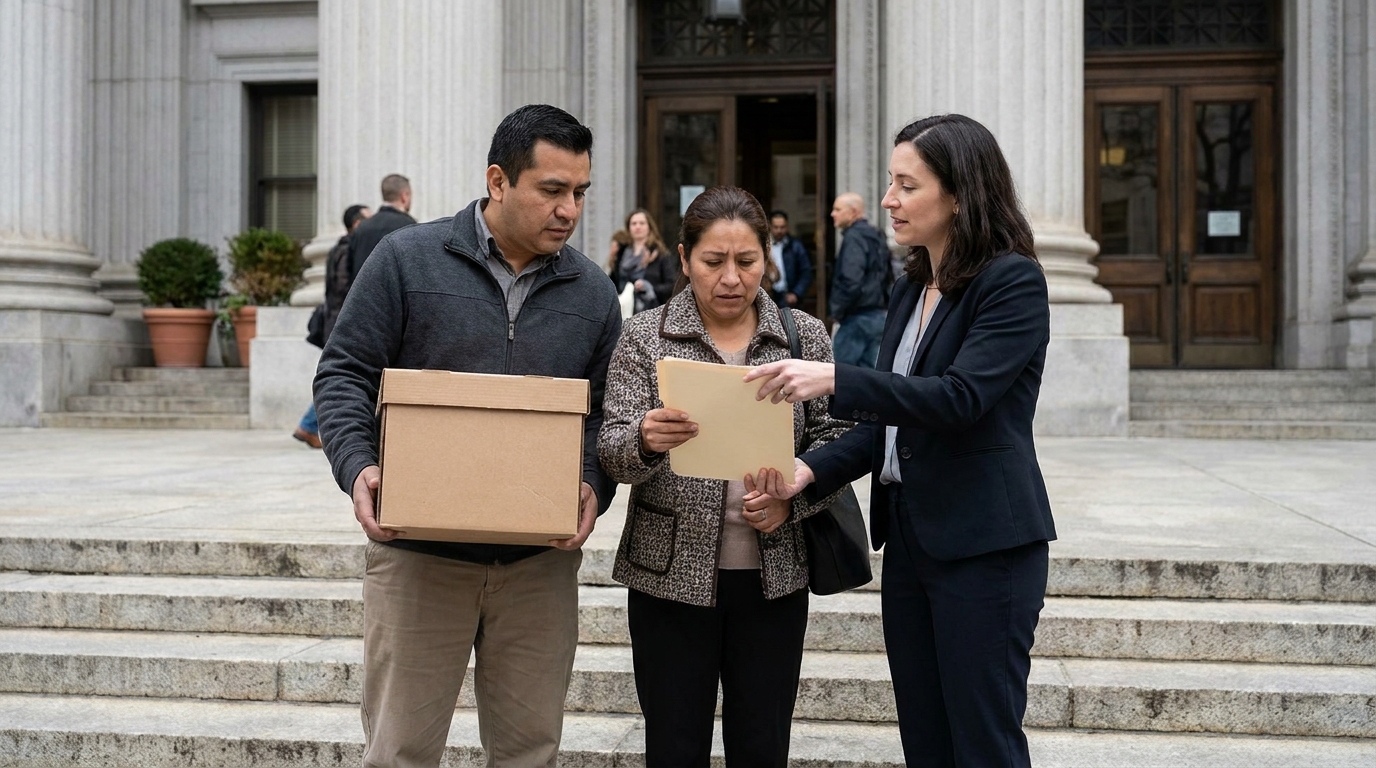
Yes — you should preserve records, avoid false statements, and seek counsel before making major decisions during an investigation. Early intervention may reduce the risk of indictment by helping prevent avoidable errors and clarifying the government's focus, but the outcome depends on the evidence and stage of the case.
Practical steps often include:
- Save notices, applications, interview records, messages, financial documents, and travel information.
- Do not delete, edit, manufacture, or backdate evidence.
- Write down who contacted you, what was requested, and when the contact occurred.
- Do not ask a spouse, witness, or family member to coordinate a false story.
- Have an attorney assess immigration and criminal exposure before responding.
A common mistake is treating a USCIS interview as an informal conversation. Statements provided during immigration services may later reach investigators or prosecutors. Likewise, declining an agent's request for an immediate interview is not the same as hiding evidence.
A lawyer may contact the responsible office, learn whether the matter is administrative or criminal, and evaluate the government's legal theory. Counsel may also prepare a response to a notice, address inconsistent information, or challenge the basis for a search, motion, or charge. Pro se means proceeding without counsel. It can increase the risk of missed issues or waived defenses.
Kolsrud Law Offices reviews the matter in stages. The firm's office looks at what the government knows, what remains uncertain, and which records support an accurate account. This measured approach helps clients understand the full weight of the federal government without assuming that every concern will become a prosecution.
When to Speak With an Attorney
Yes — prompt legal review is advisable when the government requests another interview, questions a marriage's legitimacy, or refers the matter for enforcement.
- You received a USCIS notice concerning suspected fraud.
- ICE, HSI, the FBI, or another federal agent contacted you.
- Your spouse threatened to make a false report.
- You are concerned about prior applications or interview answers.
- A visa, card, citizenship request, or family petition is pending.
Federal immigration law is national, so the same core statutes may apply in Arizona, New York, Brooklyn, or another U.S. location. However, procedure and strategy can depend on the agency, federal district, and stage of the case. International travel, security concerns, or ties to China or another country do not by themselves prove unlawful conduct.
FAQs About Marriage Fraud Investigations
How do federal authorities prove marriage fraud?
It depends on the available evidence: federal authorities generally try to prove that the parties knowingly married to evade immigration law. They may use records, payments, communications, interviews, witness testimony, and conduct before or after the wedding. For a criminal conviction, prosecutors must prove the charges beyond a reasonable doubt.
Does the FBI investigate marriage fraud?
Yes, the FBI may participate when allegations involve a larger federal scheme, organized fraud, national security, or related offenses. USCIS, DHS, ICE, and HSI also may investigate or share information. Which department takes the lead depends on the facts.
Can ICE remove someone who is married to a U.S. citizen?
Yes, ICE may take enforcement action against a person who lacks lawful status or faces another legal basis for removal, even if that person is married to a U.S. citizen. Marriage to a U.S. citizen does not automatically prevent removal. The available response depends on the person's immigration history and current proceedings.
Does divorce prove that a marriage was fraudulent?
No, divorce alone does not prove that a marriage was fraudulent. Genuine marriages sometimes end. Investigators usually look at the couple's intent when they married and the total evidence of their shared life
What happens after someone reports a sham marriage?
It depends on the report's detail and support: the agency may review it, compare it with existing records, or refer it for investigation. No action may follow if the information lacks support. Knowingly false accusations can also create legal and personal complications.
Can a person receive years in prison for marriage fraud?
Yes, a conviction under 8 U.S.C. § 1325(c) can carry up to five years in prison. Other charges could alter the potential exposure. Actual outcomes depend on the offenses, evidence, sentencing rules, and personal history, which the court must apply to the individual case.
How Kolsrud Law Offices Can Help with a Marriage Fraud Investigation in the United States
An award-winning criminal defense attorney Since 2006
Why Choose Josh Kolsrud
With over 100 trials to his name, and years of experience as a state and federal prosecutor, Josh understands the law, the legal process, and your rights. Josh is also committed to representing every client with utmost integrity and dedication

Experience
Josh has prosecuted major crimes on the state and federal level, led a successful anti-human sex trafficking operation that saved lives, and argued before countless juries and justices for his clients

Expertise
Josh is an expert in both Arizona and federal criminal law, and is ready to put that expertise to work for you.

Dedication
As a prosecutor, Josh saw far too many defendants lose their livelihood due to poor representation. Josh will always give every client his complete attention and effort
Get a Free Initial Consultation:
Complete our form below to get a free case review.
or call us at (480) 999-9444.