
When Does Murder Become a Federal Crime

Murder can become a federal crime depending on whether the federal government has federal jurisdiction and the nature of the charges. Federal jurisdiction is legal authority over the offense. That authority depends on facts such as where the killing occurred, who the victim was, and whether another federal crime was involved. This article explains federal jurisdiction, 18 U.S.C. § 1111, potential penalties, and common defense issues.
Josh Kolsrud is a former U.S. federal prosecutor who has handled more than 3,500 state and federal criminal cases and over 100 jury trials. Kolsrud Law Offices uses experience from both sides of the courtroom to help clients understand the evidence and make informed decisions about their defense strategy. The firm's approach focuses on going beyond routine representation and protecting each client's rights at every stage.
Quick Answers
It depends on whether Congress has placed the conduct within federal jurisdiction. Common grounds include a killing on certain federal property, the killing of a protected federal official, or a death connected to another federal offense.
- Most murder cases remain under state criminal law.
- 18 U.S.C. § 1111 defines murder within special federal jurisdiction.
- Federal prosecutors must prove jurisdiction and every element beyond a reasonable doubt.
- First-degree murder may carry life imprisonment or the death penalty.
- Early legal review can identify evidence, jurisdiction, and constitutional issues.
This article discusses the following:
- Is Murder a Federal Crime?
- What Does 18 U.S.C. § 1111 Require?
- When Does Federal Murder Jurisdiction Apply?
- What Penalties Can Federal Murder Charges Carry?
- How Can a Federal Criminal Defense Attorney Challenge the Case?
- Frequently Asked Questions About Federal Murder Charges
- How Kolsrud Law Offices Can Help
Is Murder a State or Federal Crime?
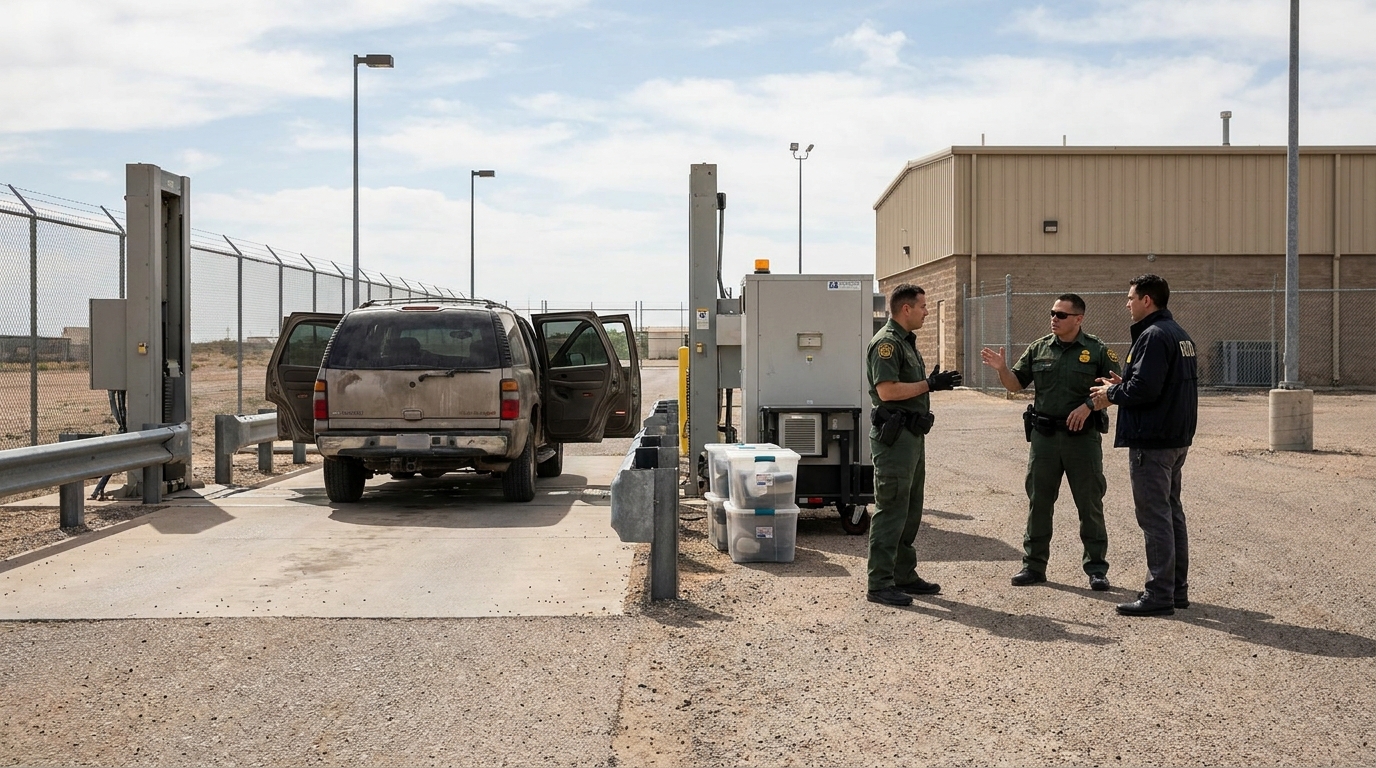
Yes, murder can be a federal crime, but most killings are prosecuted by a state. Federal authority depends on a constitutional connection or a statutory connection created by a law passed by Congress. The location alone does not settle the issue unless it falls within a defined area of federal jurisdiction.
Federal murder is the unlawful killing of a human being with malice aforethought under the applicable federal law. Malice aforethought means the legally required wrongful state of mind, which generally includes an intent to kill, an intent to cause serious harm, or conduct showing extreme disregard for human life. Murder differs from manslaughter.
The central statute is 18 U.S.C. § 1111. Congress limited that code section to murder committed within the special maritime and territorial jurisdiction of the United States. This jurisdiction includes defined vessels, lands, buildings, and other places under federal authority. A separate federal statute may also cover a killing based on the victim, conduct, or related offense.
A practical example is a death inside a building that is government property. Prosecutors still need to establish the federal status of the exact location. Ownership, control, and the legal source of jurisdiction may become disputed facts.
Our attorneys understand that this threshold question can shape the entire case. Josh Kolsrud received the AVVO Clients' Choice Award, and his Avvo.com profile describes his criminal defense background. More information about homicide allegations appears on the firm's page covering federal murder, homicide, and manslaughter.
What Does 18 U.S.C. § 1111 Require?
It requires the government to prove an unlawful killing, malice aforethought, the charged degree — first- or second-degree murder — and federal jurisdiction. The defendant is presumed innocent unless prosecutors prove each element beyond a reasonable doubt.
Statute 18 U.S.C. 1111 defines certain killings under first-degree murder. They include killings that are willful, deliberate, malicious, and premeditated. The statute also lists killings committed during certain crimes, including kidnapping, robbery, aggravated sexual abuse, sexual abuse, burglary, child abuse, and escape.
A pattern or practice of assault or torture against a child may also fall within the first-degree category. For this part of the statute, the term child refers to a person under 18. The precise facts and definitions matter because not every act of violence or abuse satisfies the code.
Second-degree murder covers other murder within the statute that does not meet the first-degree definition. A sudden killing may still support second-degree murder if the evidence proves malice. By contrast, a lack of malice could support an argument about manslaughter or another offense.
| Issue | What prosecutors generally must establish | Possible defense focus |
|---|---|---|
| Federal jurisdiction | A valid federal basis for the charge | Location, status, or statutory connection |
| Unlawful killing | Conduct caused another person's death | Causation, identity, accident, or justification |
| Malice aforethought | The required malicious state of mind | Intent, mental state, and surrounding circumstances |
| First-degree classification | Premeditation or a listed statutory basis | Planning, timing, and proof of the related felony |
The firm's Experience.com profile provides further background on Josh Kolsrud. He has also been featured more than 400 times by news programs and podcasts discussing criminal cases and court issues.
When Does Federal Murder Jurisdiction Apply?
Federal jurisdiction applies when a statute gives the federal government authority over the location, victim, or related criminal conduct. A prosecutor cannot turn an ordinary state homicide into a federal case without that legal connection.
18 U.S.C. § 7 defines special maritime and territorial jurisdiction. Depending on the facts, it may cover certain federal lands, vessels, aircraft, and places under federal control. A death at a national park or military installation may therefore trigger a federal investigation, but title records and jurisdictional records still require review.
Other common federal connections include:
- The alleged killing of a federal officer or employee protected by 18 U.S.C. § 1114.
- A death during kidnapping, bank robbery, or another listed federal felony.
- A firearm allegation connected to a qualifying crime of violence or drug trafficking offense.
- Certain civil rights, national security, terrorism, or public corruption crimes.
For example, a robbery at a federally insured bank may create federal authority separate from the murder statute. The firm's explanation of federal bank robbery under 18 U.S.C. § 2113 addresses that underlying offense. A drug distribution investigation may involve the Drug Enforcement Administration (DEA), while the Federal Bureau of Investigation (FBI) or the Department of Homeland Security may investigate other federal crimes.
State and federal agencies can investigate the same conduct, and dual proceedings are possible in some circumstances. Different sovereigns enforce different laws, so an initial state arrest does not necessarily prevent a later federal charge. The firm's FindLaw.com profile identifies its focus on serious criminal matters.
Contact us today to schedule a
FREE CONSULTATION and learn
how we can help you.
What Penalties Can Federal Murder Charges Carry?
They can carry life imprisonment, imprisonment for a term of years, or the death penalty, depending on the degree and applicable law. Sentencing exposure is serious, but the exact result depends on the conviction, evidence, findings required by law, and court rulings.
Under current federal law, 18 U.S.C. § 1111 mentions that first-degree murder can be punishable by death or imprisonment for life. Second-degree murder is punishable by imprisonment for any term of years or for life. As of 2026, a capital prosecution must also comply with the Federal Death Penalty Act, including 18 U.S.C. § 3591, and other procedural requirements.
The U.S. Department of Justice explains that federal capital cases receive additional internal review under its capital case protocol. Capital punishment is not an automatic result of a first-degree charge. Eligibility and any final sentencing decision depend on statutory factors, due process, jury findings, and case-specific circumstances.
Related charges may add separate penalties. These could involve kidnapping, assault, drug offenses, robbery, obstruction, conspiracy, or unlawful firearm conduct. A conviction may also affect property through criminal forfeiture when authorized by another statute.
The consequences may extend to employment, licensing, immigration status, family life, and business operations. The firm's article about federal drug charges explains how a separate drug offense can increase the scope of a federal criminal case.
How Can a Federal Criminal Defense Attorney Challenge the Case?

Your defense attorney can challenge jurisdiction, intent, causation, evidence, police conduct, and the charged degree of murder. The available defenses depend on what happened and what the government can lawfully prove.
A focused defense review commonly considers:
- Whether federal jurisdiction actually covers the location or conduct.
- Whether forensic evidence, digital evidence, firearm evidence, or witness evidence is reliable.
- Whether law enforcement obtained statements or property through an unlawful search or interrogation.
- Whether the evidence proves malice, premeditation, or the alleged related felony.
- Whether self-defense, defense of another person, accident, duress, or another legal defense may apply.
Federal procedure moves through investigation, grand jury review, indictment, arraignment, discovery, motions, trial, and sentencing. A grand jury decides whether there is enough evidence for a formal charge. According to the United States Courts, the grand jury decides whether evidence supports a federal indictment. It does not decide guilt.
A motion to suppress asks the judge to exclude evidence that the government obtained in violation of the Constitution. Expert disputes may concern pathology, DNA, ballistics, electronic records, or the cause and time of death. A deposition is uncommon in federal criminal practice compared with civil litigation, so counsel must use the available criminal rules carefully.
One step people often get wrong is trying to explain the incident to an officer before reviewing the evidence. Even a well-meant statement could be incomplete or used out of context. Proceeding pro se means proceeding without a lawyer and may also lead to missed motions, waived defenses, or harmful statements.
In our experience, early intervention can reduce the risk of an investigation escalating without a clear defense response. Our firm evaluates how prosecutors may build the case and works to protect your rights at every stage.
Josh Kolsrud has been named to The National Trial Lawyers Top 100 Criminal Defense and served as chairman of the Arizona State Bar's Council on Persons with Disabilities in the Legal Profession in 2020, 2021, and 2022.
Some investigations involve alleged sexual offenses against a child or digital evidence of sexual material. Those matters may bring separate federal crimes and different proof requirements. The firm's discussion of whether child pornography is a federal crime explains one distinct area of federal criminal law.
When to Speak With an Attorney
Seek counsel as soon as federal agents request an interview, execute a warrant, or identify you as a subject or target.
- Do not destroy, alter, or hide evidence.
- Preserve messages, records, and possible witness information.
- Do not discuss case facts on social media.
- Ask counsel to evaluate jurisdiction before giving a statement.
Frequently Asked Questions About Federal Murder Charges
What is the main difference between first-degree and second-degree federal murder?
First-degree murder requires premeditation or another basis listed in 18 U.S.C. § 1111, while second-degree murder includes other unlawful killings with malice aforethought that do not meet the first-degree definition. The difference often turns on intent, planning, and the surrounding circumstances.
Does 18 U.S.C. § 1111 apply everywhere in the United States?
No. Section 1111 applies to murder within the special maritime and territorial jurisdiction of the United States. Another federal statute might apply outside those places based on the victim or related crime. Otherwise, state law typically governs.
Can self-defense apply to a federal murder charge?
Yes, if the facts and federal precedent support a justified use of force. The court will often examine the perceived threat, timing, necessity, and amount of force. Whether the defense succeeds depends on the evidence and the governing law.
Can federal and state prosecutors charge the same killing?
Yes, in some cases, because state and federal governments are separate sovereigns. Whether both proceed depends on their respective statutes, policies, and proof. Counsel should review each charge and any double jeopardy issues. Double jeopardy concerns prosecution or punishment more than once for the same offense.
What agencies investigate federal homicide cases?
The FBI often leads or supports a federal homicide investigation. The DEA may participate when drug trafficking is involved, while Homeland Security agencies may handle certain border or national security matters. Local law enforcement may also work with federal investigators.
What should a person do after learning about a federal investigation?
The person should avoid discussing facts with investigators or third parties before consulting a defense attorney. It is important to preserve evidence and comply with lawful court orders. Counsel can communicate with prosecutors and determine whether the person is a witness, subject, target, or defendant.
How Kolsrud Law Offices Can Help With Federal Murder Charges in the United States
An award-winning criminal defense attorney Since 2006
Why Choose Josh Kolsrud
With over 100 trials to his name, and years of experience as a state and federal prosecutor, Josh understands the law, the legal process, and your rights. Josh is also committed to representing every client with utmost integrity and dedication

Experience
Josh has prosecuted major crimes on the state and federal level, led a successful anti-human sex trafficking operation that saved lives, and argued before countless juries and justices for his clients

Expertise
Josh is an expert in both Arizona and federal criminal law, and is ready to put that expertise to work for you.

Dedication
As a prosecutor, Josh saw far too many defendants lose their livelihood due to poor representation. Josh will always give every client his complete attention and effort
Get a Free Initial Consultation:
Complete our form below to get a free case review.
or call us at (480) 999-9444.